make preferable
We see how the Europeans are trying to use the upcoming parliamentary elections in Armenia for this purpose. Mikhail Kalugin, Director of the Fourth CIS Department of the Ministry of Foreign Affairs (MFA) of Russia, stated this in an interview with TASS.
According to him, Russian Deputy Prime Minister Alexey Overchuk’s statement, which has come to the attention of the public, is an example of the signals that Russia has delivered and continues to deliver to the leadership and society of Armenia at various levels. "We believe that the citizens of our countries should know that Yerevan's progress along the so-called ‘European path’ may at some point lead to systemic changes in Russian-Armenian relations. And this is in the case when the EU does not offer any clear alternative [to Armenia] in terms of security instruments, economic stability, prosperity, and progress. This is understandable. Brussels is not interested in taking care of Armenia or the countries of the South Caucasus, but first of all in fulfilling its own geopolitical tasks, which are currently aimed at confronting Russia,” Kalugin noted.
He noted that this is why the European commissioners are trying to use the upcoming parliamentary elections in Armenia: “Two [EU] missions have already been deployed in the [Armenian] republic, which are similar to those missions that were deployed during the election campaigns in Moldova. The declared goals, of course, may sound noble, but in reality the meaning of the missions is obvious: to strengthen the European Union’s control over the sociopolitical life and economy of the [Armenian] republic, thus contributing to Yerevan’s distancing from Moscow.
European ‘experts’ seek to literally ‘mold’ the image of Russia as an enemy. They are creating a false impression that Moscow is ‘against the establishment of an independent Armenia.’ They baselessly accuse our country of ‘hybrid attacks’ and interference in the internal affairs of the [Armenian] republic, although for some reason they do not consider their own deep engagement to be such. In general, the EU has repeatedly been caught in attempts to direct electoral processes in other countries. We have noticed that some Armenian media outlets and officials also join in spreading these messages,” Kalugin said.
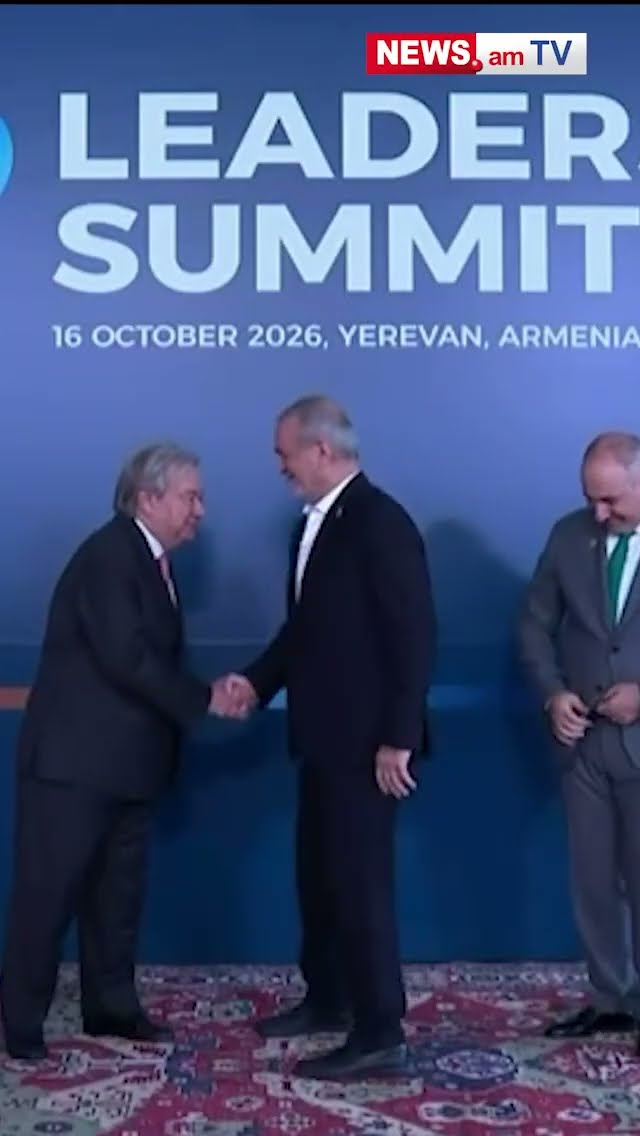
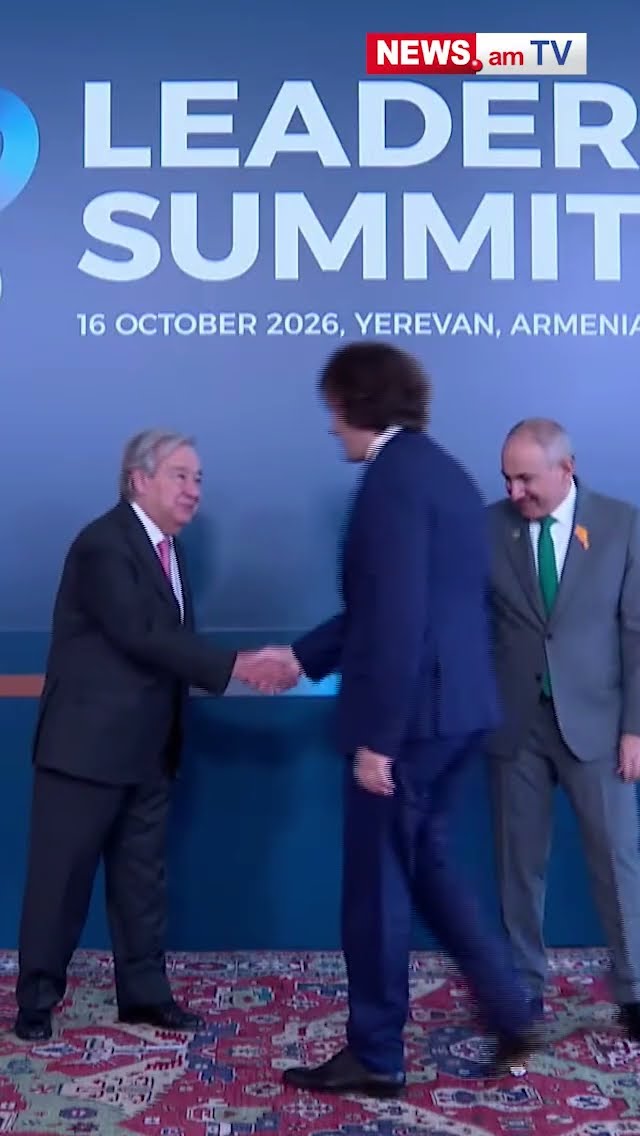
According to him, the holding of the European Political Community and the Armenia-EU summits last week in Armenia, especially ahead the parliamentary elections in the country, also fits into the logic of creating a tempting European “mirage” for the Armenian population.
From this perspective, Kalugin considers one episode to be significant: “The statement published following the results of the Armenia-EU summit mentions 2.5 billion euros, I emphasize ‘possible investments.’ This is exactly the same amount that the EU had promised a few years ago, but was unable to raise. That is, the Europeans are trying to ‘sell’ something that does not exist; moreover, not for the first time. Because of this dazzling ‘gloss,’ the fact that the statement mentions the importance of joint work to decommission the Metsamor nuclear plant, one of the pillars of the [Armenian] republic’s energy security, has also gone unnoticed. Naturally, Moscow also noted the visit of [Ukrainian President] Vladimir Zelenskyy [to Armenia], instigated by Brussels, and his despicable anti-Russian statements, which the host Armenian side diligently was pretending not to notice,” Kalugin stated.
All this, according to him, only confirms that behind the forced attention shown by the Europeans to their so-called “equal partners” lies an exclusively instrumental approach.
“No one in Brussels even thought about the interests of Armenia, which until recently sought to maintain an equal distance from the Ukrainian crisis. The Europeans have brought their Russophobic agenda to the [Armenian] republic and, willy-nilly, have adapted Yerevan to it as well. In fact, they have used the country as a convenient platform for their political plans. We know that emotionality is a characteristic feature of the Armenian people, for which they are known in a good way throughout the world. We [i.e. Russia] hope that the country's leadership and citizens will be able to look with a sober eye at the events that took place and become convinced that, apart from another series of beautiful promises, ‘brilliant’ handshakes and walks in Yerevan by the leaders of the once giant European states, European politicians have not actually brought anything valuable to Armenia. As always, European politicians have modestly remained silent about the economic losses that the [Armenian] republic will suffer due to its reorientation towards the EU. [Russian deputy PM] Overchuk also clearly pointed this out in an April interview. Some sources in Yerevan immediately began to interpret this as a ‘threat.’ However, it fully fits into the logic of the agreement reached between the leaders of our countries; namely, to explain to [Armenian] citizens the positive and negative aspects of Eurasian and European integration. Let me add that integration processes require systematic work, which is hardly consistent with the approach where [Armenia’s] membership in the EAEU is viewed as a temporary measure. In short, they [i.e. Armenia] will not be able to sit on two chairs at the same time," the Russian MFA official concluded.