make preferable
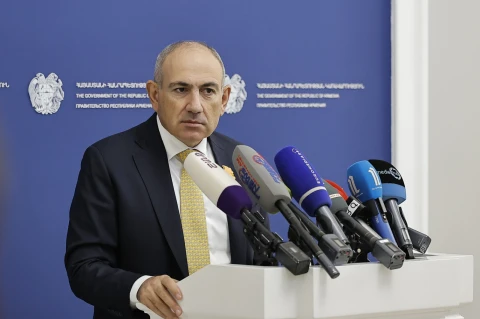
Armenia cannot be expelled from the Eurasian Economic Union (EAEU), decisions there are made by consensus. Prime Minister Nikol Pashinyan told this to reporters after casting his ballot in Sunday’s parliamentary elections in Armenia.
Pashinyan reminded that Armenia and the other EAEU member states also have the right of veto.
"As for holding a referendum on ‘[Armenia staying in the] EAEU or [joining the] EU,’ then for that there must be a subject of a referendum, and for that subject Armenia must at least have officially applied to become an EU member or must have the status of becoming an EU member. At the moment, neither of these is available, because we [i.e. Armenia] are objectively not ready for it now. In that case, why are we applying as a formality? To make a fuss? We will now calmly continue the path of reforms, as well as the assessment of our EU partners will be," Pashinyan said.
In his opinion, Armenia’s EAEU partners are tactically not approaching the issue correctly, and instead of raising the perception of the EAEU in the country, they are doing everything to lower that perception in Armenia.
When asked whether relations with China would also be called into question in the event of a deterioration in Armenia’s relations with the EAEU, Pashinyan reminded that last year Armenia signed a strategic partnership agreement with China, and these relations would not change with a negative connotation as a result of the elections.
“I am sure that the strategic partnership will continue also in the future. Both countries are interested in this issue, especially within the framework of [the] TRIPP [i.e. the Trump Route for International Peace and Prosperity project],” he said.
Regarding the recent sanctions applied by Russian on Armenian agricultural products, Pashinyan said that such problems always occur, but certain forces operating in Armenia are trying to exacerbate these issues.
“There are always such working issues in the EAEU. There are such issues on the EAEU agenda, which we always discuss: phytosanitary issues, standards, exports, origin of goods. The EAEU member states, on the contrary, are worried that suddenly goods from third countries will not be imported into the territory of the union, will become ‘EAEU goods,’ and will be re-exported to another EAEU country," the Armenian prime minister stated.