make preferable
IAEA Director General Rafael Grossi urged Iran to “resume engagement” to restart inspections at facilities that the United States and Israel bombed a year ago, Reuters reports.
At the same time, the United States led a campaign to adopt a corresponding resolution at the agency’s Board of Governors.
Tehran has still not provided the International Atomic Energy Agency (IAEA) with information about what happened at the attacked nuclear facilities, nor about the fate of the nuclear material that had been there, including uranium enriched to a level close to weapons-grade.
“It is extremely important for us to resume engagement,” Grossi said, addressing the IAEA’s 35-member Board of Governors on the first day of its quarterly meeting. “I call on Iran to engage constructively with the Agency to facilitate the full and effective implementation of safeguards in Iran,” he added in a separate written statement to the board (the term “safeguards” in IAEA practice includes inspections).
The IAEA had been conducting spot checks at facilities that were not bombed, but in February the agency suspended that activity for security reasons because of the resumption of military strikes. Since then, inspectors have visited only Iran’s operational nuclear power plant in Bushehr.
“I have sporadic contacts with the foreign minister and other officials, but essentially the channel of communication is broken,” Grossi said at a press conference after his address to the board.
At the same time, the United States, with the formal support of the United Kingdom, France, and Germany (the E3), initiated the push for the resolution. The Board of Governors is expected to vote on it at the end of this week. The document instructs Iran to provide “without delay” “accurate information” about the bombed facilities and the enriched uranium.
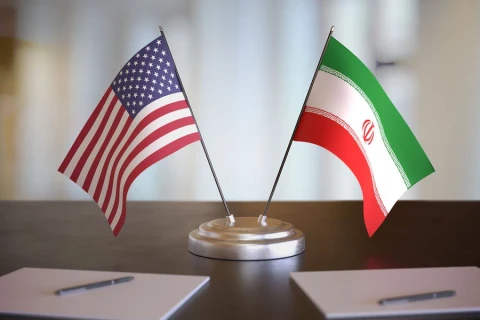
Although diplomats say the resolution is likely to be adopted by a significant majority of votes, as was a similar document in November last year, the move risks complicating direct talks between the United States and Iran. These contacts are aimed at extending the ceasefire and are intended to prepare the ground for a broader dialogue, including on Iran’s nuclear program.
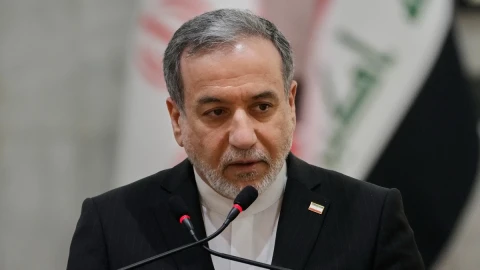
“Responsibility for an internationally wrongful act lies with the perpetrator and cannot be shifted onto the victim. The Board must not become a tool for removing responsibility from those who carried out these attacks,” Iran’s permanent mission to the IAEA said on social media platform X, commenting on the draft resolution and reminding that the strikes on nuclear facilities were carried out by the United States.
“The Board should exercise caution in its further actions. Coercion and confrontation do not lead to cooperation. This undermines the prospects for a diplomatic settlement,” the Iranian mission added.