make preferable
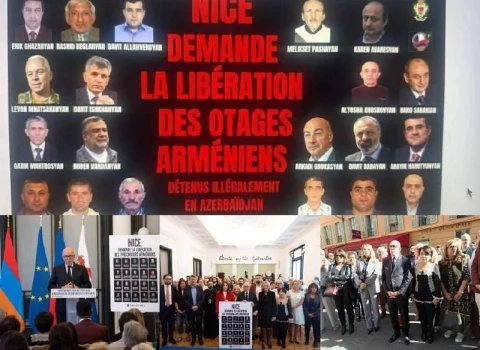
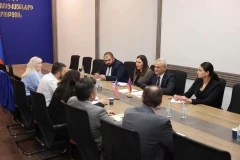
With the support of the European Armenian Federation for Justice and Democracy (EAFJD / ANC Europe) and hosted by Members of the European Parliament Costas Mavrides and Miriam Lexmann, a discussion titled "Armenian Political Prisoners in Azerbaijan and the Imperative of EU Involvement" was held in the European Parliament on July 14. The event was attended by MEPs, lawyers, human rights defenders, and family members of Armenian hostages held in Azerbaijan. The discussion focused on the ongoing detention of Armenian prisoners of war (POWs) and political hostages in Azerbaijan, as well as the potential role of the European Union in ensuring their release, the ARF Central Office reports.
The speakers discussed the humanitarian, legal, and political aspects of the issue, asserting that the ongoing illegal detention of Armenian prisoners undermines both international law and the prospects for sustainable peace between Armenia and Azerbaijan.
Costas Mavrides opened the discussion, reaffirming the European Parliament's clear position demanding the immediate release of the Armenian prisoners. He also reminded the European Commission of its mandate to make such demands, as enshrined in several European Parliament resolutions, and highlighted the need to review the EU-Azerbaijan energy agreement through the prism of international law and human rights. He shared the disappointment expressed by many attendees that the geopolitical considerations of the executive branch have overshadowed both the will of the European Parliament and the values upon which the European Union is founded.
For her part, Miriam Lexmann added that the ongoing deepening of relations between the European Union and Armenia provides an opportunity for the European Commission to take a leading role in this matter. She emphasized that the issue of political prisoners must be given top priority and should not be compromised.
Representing the families of the detainees, Armen Ishkhanyan, the son of the former Speaker of the National Assembly of the Republic of Artsakh, Davit Ishkhanyan, spoke about the impact of his father's imprisonment. He shared that during the forced displacement of Artsakh's Armenian population in 2023, his father remained in Artsakh to assist in the safe evacuation of civilians, after which he was arrested by Azerbaijani authorities. Since then, following a politically motivated trial, he has been sentenced to life imprisonment.
Reflecting on more than 1,000 days of separation, Armen Ishkhanyan described the severe psychological impact the imprisonment has had on his family. Recalling a conversation with his daughter, he said: "When I asked her what she wanted for her birthday, she simply replied, 'I want my grandfather to come home.'"
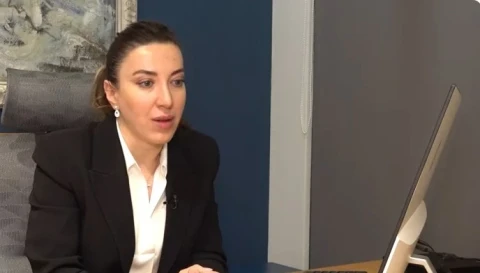
The legal implications of the continued detention of the captives were also discussed at the conference. Attorney Siranush Sahakyan, who represents the interests of numerous Armenian prisoners at the European Court of Human Rights, emphasized that the significance of these cases extends far beyond the fates of individual people. She noted in particular: "The illegal detention and sentencing of Armenian prisoners is not simply a human rights issue, but a defining test of Europe's ability to defend the rule of law and the international legal order. While the European Parliament has adopted important resolutions, they must now be accompanied by effective political action. Otherwise, tomorrow impunity will become the norm."
Simon Papuashvili, Director of Eastern Europe and South Caucasus Programs at the International Partnership for Human Rights (IPHR), noted for his part that the release of the detainees must be viewed as a prerequisite for any credible peace process. According to him: "Peace cannot be credible as long as Armenian prisoners remain imprisoned in Azerbaijan. Their immediate and unconditional release is not a secondary issue, but a fundamental humanitarian obligation and a necessary foundation for any real peace process. Justice, trust, and reconciliation must begin with the safe and prompt return home of every captive."
Joel Veldkamp, Director of Advocacy for Christian Solidarity International (CSI), noted that this issue also holds broader strategic significance for Europe. According to Veldkamp: "A strong Armenia can be a useful ally for the European Union in an era of growing Turkish influence and weakening international norms. To empower Armenia, European policymakers must find ways to make the Armenia-Azerbaijan peace process more balanced. Intervening to protect the twenty Armenian hostages held in Baku would be an excellent start."
Throughout the conference, speakers called on the European Union to move beyond statements expressing concern and to utilize the diplomatic and political tools at its disposal to pressure for the immediate release of the detainees. They emphasized that the ongoing imprisonment of Armenian political prisoners and POWs remains one of the primary obstacles to confidence-building and establishing sustainable peace in the South Caucasus.
The conference concluded with a unified call to European Union institutions to intensify their engagement with Azerbaijan and make the release of all Armenian prisoners an immediate priority.