make preferable
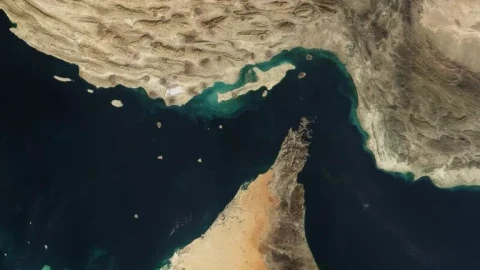
U.S. forces announced “another large-scale wave of strikes” on targets in Iran on the night of July 17. A statement from Central Command (CENTCOM) said that “dozens of Iranian military facilities” were hit, including coastal surveillance and air defense posts, “military logistics infrastructure facilities, and naval assets.” According to the Iranian agency Fars, several bridges in the southern province of Hormozgan were damaged in the U.S. strikes. Some of them were located on routes leading to the city of Bandar Abbas, a coastal city on the Strait of Hormuz where a naval base of the Islamic Revolutionary Guard Corps (IRGC) is located.
The U.S. struck the bridges to block supply routes to Bandar Abbas, a senior U.S. official told The Wall Street Journal. It is noted that these attacks, which are part of a large-scale air campaign and naval blockade, are aimed at depriving the Iranian regime of logistical resources in the Strait of Hormuz area. According to the Iranian side, seven people were killed and another nine were wounded as a result of the strikes. Before that, President Donald Trump had threatened to strike Iranian bridges and power plants if Tehran did not return to the negotiating table.
According to a statement by Iran’s Energy Ministry cited by the Tasnim agency, a power transmission line in Bandar Abbas and nearby villages was damaged as a result of the U.S. shelling. Fars also reported damage to a railway junction in the city.
CENTCOM said the attacks were carried out by U.S. fighter jets, drones, and Navy ships using “precision-guided munitions.” This wave of strikes was the sixth in a row after Iranian forces attacked commercial vessels in the Strait of Hormuz. On July 15, the U.S. imposed a blockade on Iranian shipping in this maritime route and began redirecting vessels heading to Iranian ports, and opened fire on some of those that did not comply.
Trump, during discussions with his closest aides, had begun leaning toward expanding the operation in Iran despite the ceasefire concluded on June 17, WSJ reported. The options ranged from intensifying airstrikes, including against a site linked to the nuclear program that had so far not been attacked, to sending troops to islands near the Strait of Hormuz.