make preferable
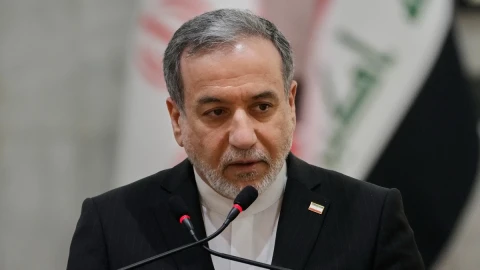
Iran’s retaliatory strikes on U.S. military bases in the region fundamentally altered the regional security architecture, Foreign Minister Abbas Araghchi said, asserting that they demonstrated Iran’s ability to strike across the region without provoking an effective military response, Tasnim reports.
He added that Iran had anticipated the possibility of war well in advance and prepared detailed action plans for various scenarios, including joint U.S.-Israeli attacks and even the assassination of the leader of the Islamic Revolution. He stressed that the country “was not surprised in the least” by the outbreak of hostilities and was fully prepared to respond.
The foreign minister said that Tehran entered into negotiations with the United States despite expecting war, explaining that the talks were intended to exhaust diplomatic options and demonstrate to the international community that Iran had pursued every peaceful avenue. He said Washington repeatedly demanded “zero uranium enrichment” and ultimately chose military action after failing to force Iran to abandon its nuclear program through negotiations.
Araghchi rejected claims that diplomacy led to war, saying instead that the conflict resulted from the conviction of the United States and Israel that Iran had been weakened and had lost its regional deterrence capacity. According to him, that assessment proved to be a serious mistake, as Iran put up strong resistance and forced its opponents to halt the military campaign.
He said that the experience of the previous 12-day war enabled Iran to strengthen its military capabilities and improve combat readiness, paving the way for victory in the subsequent 40-day conflict. He noted that in recent months Iran’s missile-launch capabilities had been significantly upgraded, defying the enemy’s expectations.
Araghchi also said that the Armed Forces remained on full combat alert throughout the negotiations and were never instructed to rely on diplomacy in matters of national defense. He reported that plans such as the immediate closure of the Strait of Hormuz under certain wartime scenarios had been prepared in advance and implemented in accordance with pre-approved emergency action plans.
Iran’s foreign minister said that decisions on negotiations are made collectively by a specialized committee under the Supreme National Security Council, which at the same time instructed the country to prepare for war. He added that Iran consistently rejects U.S. demands for zero enrichment or a long-term suspension of uranium enrichment, insisting that the country’s nuclear rights are not open to discussion.
Araghchi added that although Iran has always preferred diplomacy to avoid the costs of war, it will not compromise its national interests under pressure.