make preferable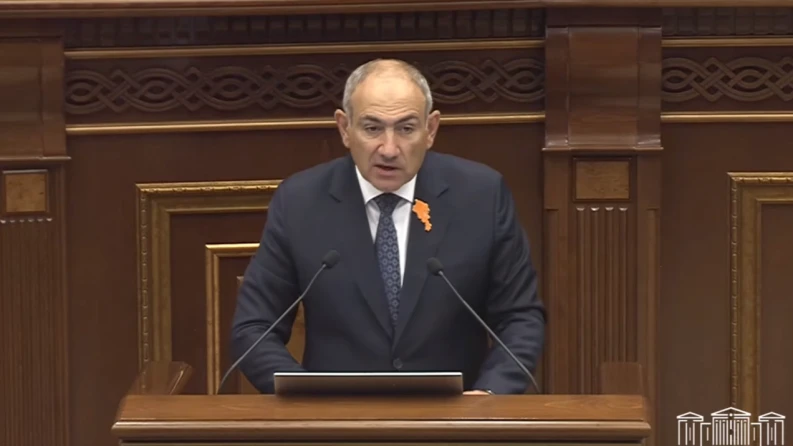
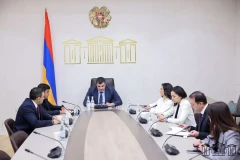
A balanced and balancing foreign policy became one of the key tools that enabled us to stabilize the external environment of the Republic of Armenia. Prime Minister Nikol Pashinyan on Monday stated this at the National Assembly while presenting the upcoming five-year program of Armenia’s new government.
Also, Pashinyan noted as follows, in particular: “The [Armenian] government will not only continue a balanced and balancing foreign policy, but also adopts it as a foreign policy strategy, the key task of which is not to allow asymmetries or to have a tool to balance asymmetries in foreign relations.
Regionalization plays a key role in this foreign policy, the goal of which is to make living in its own environment without foreign assistance not only possible, but also comfortable for Armenia. In this sense, the further development of [Armenia’s] relations with Georgia, the Islamic Republic of Iran, the Republic of Turkey, the Republic of Azerbaijan are of great importance.
Our relations with the United States are already on the rise in terms of extra-regional policy. The memorandum on strategic partnership between Armenia and the US was signed only in January 2025, and look at the developments that have occurred during this time. I remember that in September of last year, exactly a year ago, I had to ‘justify’ myself in this hall that on August 8, I had signed only a memorandum of intent with [US] President [Donald] Trump on an innovative partnership in the field of artificial intelligence and semiconductors, which, including the insistence of some opposition MPs present in the hall at that time, was a paper that said nothing and meant nothing.
A year after the signing of that ‘paper that said nothing,’ three supercomputer centers were opened in Armenia, one of which is at Yerevan State University, the other two are artificial intelligence factories, and the plans for cooperation between Armenia and the US with private investors in this field are such that we may have to reflect on our energy strategy again, because the investment programs being outlined in the field of artificial intelligence will increase energy demand [in Armenia] at a tremendous pace.
Our relations with the US are now based on the charter of a comprehensive strategic partnership, which was recently signed, and this is the pinnacle of our countries’ relations. In recent years, we [i.e. Armenia] have established strategic relations with Georgia, France, China, the Netherlands, Kazakhstan, Germany, Luxembourg, the United Kingdom, Bulgaria, Croatia, and Lithuania.
Our relations with France are becoming more multidimensional and multifaceted, and we are already cooperating in domains that we have never cooperated in before.
The strategic agenda of our partnership with the European Union [(EU)] is being implemented at a visible pace. The law on the launch of the process of Armenia’s accession to the EU, adopted by the National Assembly last year, gave new impetus to this process. In May 2026, the 8th Summit of the European Political Community was held in Yerevan, followed by the first Armenia-EU Summit. Armenia is currently the only country with which the European Union is actively negotiating visa liberalization, and we intend to achieve visa liberalization with the European Union by 2029.”
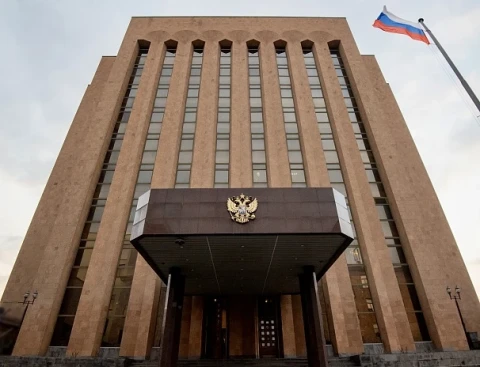
According to Pashinyan, the rapprochement of Armenia’s relations with the EU has raised certain concerns in Russia.
“In my opinion, the development of our relations with the European Union has actually given rise to this and is not its underlying cause. And the fundamental reason for the concerns that have arisen in Russia is the transformation that has begun in Armenia-Russia relations. Moreover, this transformation is not someone’s whim, but a natural process, by and large.
It is one thing for Armenia-Russia relations to be in conflict conditions, and quite another when peace has been established between Armenia and Azerbaijan, and there is no tension at all in Armenia-Turkey relations and the outlook is positive.
Due to objective and subjective historical circumstances, the perception of our relations with Russia has been mainly military-security. For two centuries, Armenian-Russian relations have been built on the foundation and understanding that Russia is the guarantor of the security of the Armenian people, and therefore the guarantor of the Republic of Armenia. I have not doubted Russia's commitment to fulfilling this function, but the events of 2021, 2022, 2023 showed that due to its own security problems, the Russian Federation may sometimes have significant limitations in fulfilling this role," the Armenian premier added.