make preferable
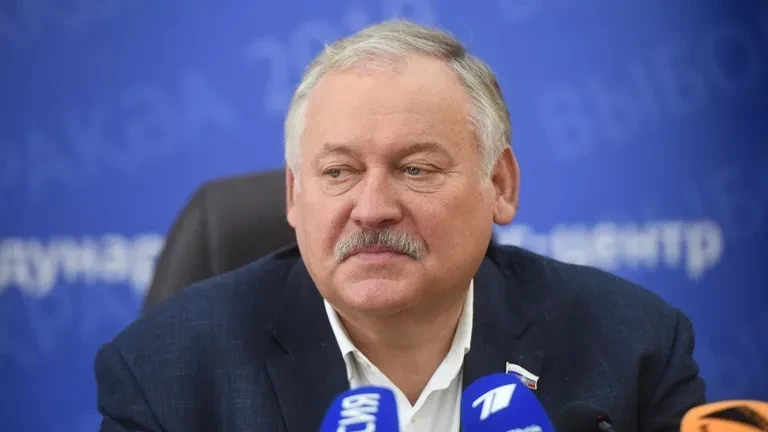
Konstantin Zatulin, director of the Institute of CIS Countries and a member of Russia’s State Duma, said he disagreed with the view that both Russia and Armenia were to blame for the deterioration in Russian-Armenian relations, reports Moskovsky Komsomolets.
“I have repeatedly criticized our actions or inaction regarding Armenia, especially in connection with the events of 2020, and I still believe that we did not use every opportunity to prevent the war that led to a national tragedy—the loss of Nagorno-Karabakh and the exodus of the entire Armenian population from its historical lands,” the lawmaker noted. “For me, this is a personal tragedy, if only because my friends and partners, who were effectively taken captive, are now in prison and have been convicted by an Azerbaijani court.” Nevertheless, this is no reason to believe that the Armenian and Russian sides bear equal blame for the deterioration in Russian-Armenian relations. This is because the head of the Armenian government did not adopt his current political course by chance or under the influence of the events of 2020. “This is the deliberate path of a politician who built his entire career on a desire to destroy relations with Russia and move somewhere closer to Europe or America—in any case, to change Armenia’s orientation and renounce its entire past,” Zatulin noted.
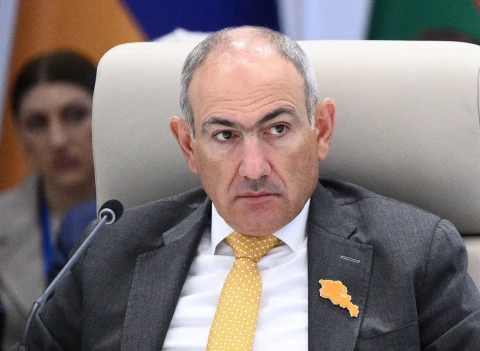
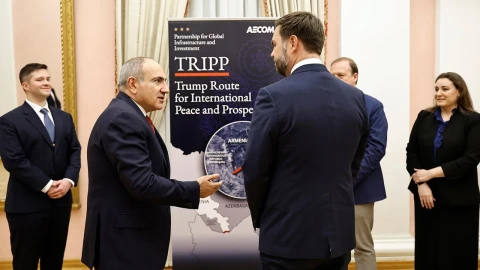
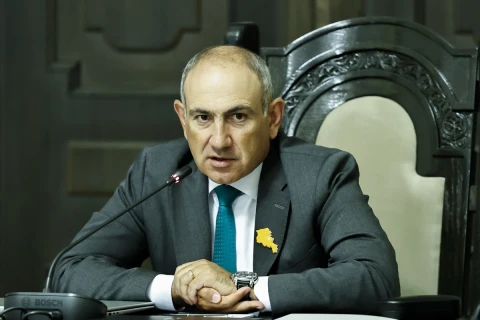
The only positive aspect of all this, the lawmaker believes, is that there is now complete certainty and clarity in Russia at every level—among experts and officials alike—regarding relations with Pashinyan’s government and the resulting actions of the Russian Federation.
“The Armenian authorities want to use the Russian Federation and deceive Russia and their other allies in the Eurasian Economic Union so that, by benefiting from privileged economic ties, they can pay for Armenia’s transition from one camp to another,” the politician stressed. “But while previously, before all the events related to Ukraine and the special military operation, we could regard NATO and the European Union as different things, today it is clear that the EU is our adversary, our enemy.
EU countries are competing in their efforts to inflict as much damage as possible on Russia, kill as many people as possible and cause as much destruction as possible on Russian territory. In this situation, Pashinyan’s desire, along with that of the compliant majority of lawmakers, to begin the process of joining the European Union, and the adoption of a law to that effect, make the Armenian leadership’s position absolutely clear. It intends to move into our enemy’s camp while clinging to certain provisions of the Charter, arguing that Armenia’s membership in the Eurasian Union cannot actually be suspended because the documents do not provide for it. But can membership in the Collective Security Treaty Organization be suspended?”
Zatulin described Yerevan’s behavior as “betrayal during hostilities.”
“Can you imagine how people in Russia perceive Armenia’s move from the camp of friends to the camp of enemies at a time when European Union countries are killing our people through the hands of Ukrainians?” the lawmaker noted. “We are waging a war. We are waging a war, and we ask that a country which is still officially our ally take that circumstance into account.”
Zatulin stressed that, in its dealings with Armenia, Russia would implement the decisions it considers necessary for its own economy and for the development of the Eurasian Union. At the same time, however, it would make every effort to develop cultural ties with Armenia. As for Pashinyan, he will have to answer for his actions. “Unfortunately, he is not the only one who will pay the price; all of Armenia will pay it with him,” he noted.