make preferable
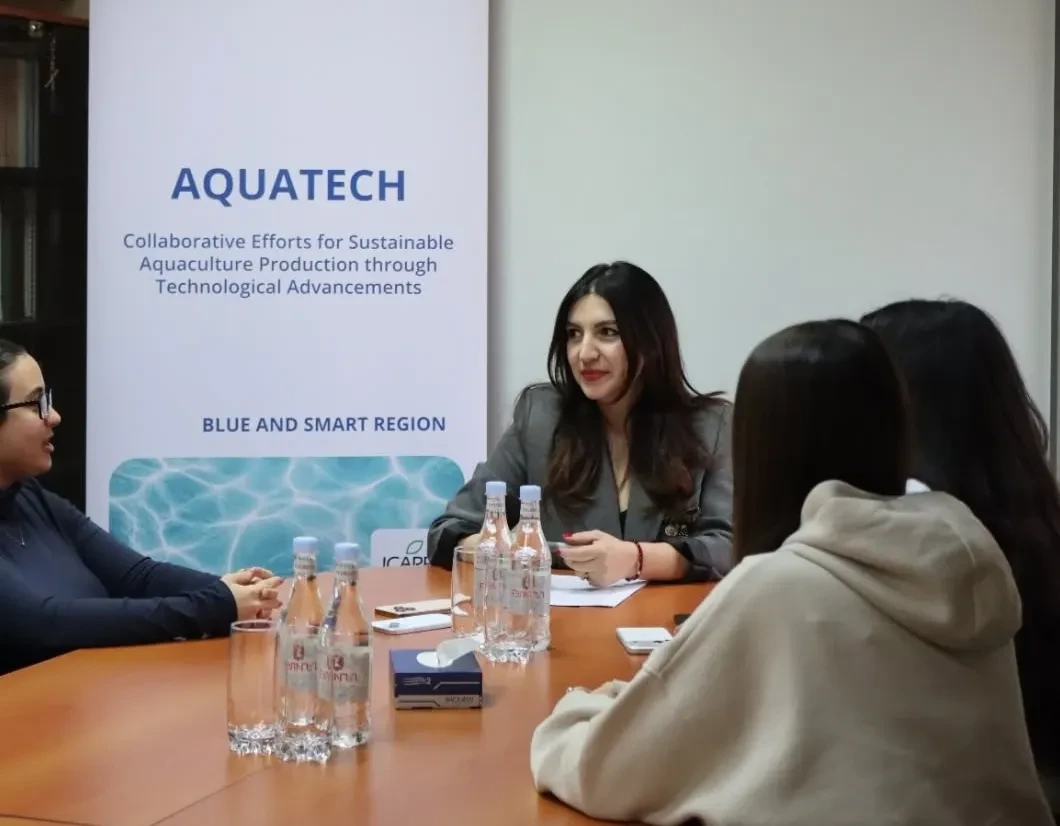
How can aquaculture become more sustainable, efficient, and resilient through the integration of modern technologies, scientific data, and regional cooperation—and what role is Armenia playing in this process?
Armenia is participating in the AQUATECH project, titled “Collaborative Efforts for Sustainable Aquaculture Production through Technological Advancements.” Implemented under the Interreg NEXT Black Sea Basin Programme, the 30-month initiative brings together six partner organizations from Armenia, Greece, Bulgaria, Georgia, and Türkiye. Armenia is represented in the project by the International Center for Agribusiness Research and Education (ICARE).
During a meeting with journalists, Sona Khojoyan, the project coordinator, outlined the key challenges that prompted the launch of the initiative. The Black Sea Basin faces significant environmental and socio-economic challenges, including environmental degradation, unsustainable aquaculture practices, water pollution, and economic instability within the sector. These pressures threaten aquatic ecosystems and the livelihoods of communities that depend on them.
In Armenia, the project will focus on the practical application of its activities at the level of individual fish farms, introducing modern approaches and technologies to support more sustainable aquaculture production.
“The core concept of AQUATECH is to combine modern technologies, scientific data, and regional cooperation to make aquaculture more sustainable, efficient, and resilient. The project's overall objective is to improve the sustainability and productivity of aquaculture across the Black Sea Basin through the introduction of advanced environmental monitoring technologies, strengthened cooperation among stakeholders, and the dissemination of good practices,” Khojoyan explained.
Through the introduction of early warning systems, the development of hydrodynamic models, and comprehensive environmental assessments, the project aims to improve water quality management, strengthen disease prevention and control, and enhance the operational efficiency of aquaculture farms.
According to Khojoyan, these efforts are expected to reduce the environmental footprint of aquaculture while improving the economic viability of fish farms, ultimately contributing to healthier aquatic ecosystems and more resilient local economies.
“Among the key expected results of AQUATECH are the installation of automated environmental monitoring stations, the development of a hydrodynamic model, and the establishment of a digital Community of Practice (dCoP)—a platform designed to facilitate professional networking, collaboration, and knowledge exchange. The project will also develop educational and promotional materials to support the dissemination of knowledge and best practices. These outputs will benefit a broad range of stakeholders, including aquaculture producers, researchers, policymakers, and local communities,” the project coordinator noted.
She further emphasized that AQUATECH's approach is built on the integration of technological innovation, stakeholder engagement, and capacity building.
“By bringing together expertise, technology, and regional cooperation, AQUATECH aims to contribute to the development of a more sustainable and resilient aquaculture sector across the Black Sea Basin, while supporting environmental protection and the socio-economic development of local communities,” Khojoyan added.
The AQUATECH project has a total implementation period of 30 months.