make preferable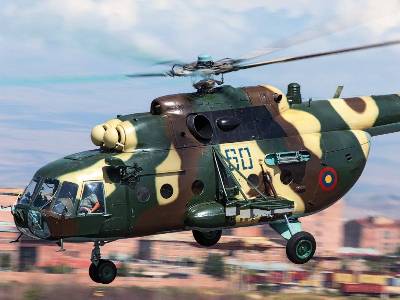
Press on Karabakh issue: New equipment may in no way impact conflict outcome
The newspaper Naked Science has analyzed the data on the air force potential of Armenia and Azerbaijan, concluding that victory in a modern war requires not only new weapons but also the culture of applying them.
The article “Armenia vs Azerbaijan: On air force potential”presents in a great detail data on the existence of specific types of weapons of each of the sides. According to the newspaper, the weaponry of the sides is mostly old but Azerbaijan has an advantage in their number.
“Such a great difference in the equipment of the armed forces has to do with economics. Azerbaijan has oil, the hydrocarbons constituting nearly 88.2 percent of the republic’s entire export. The situation is harder in Armenia. For instance, in 2013, the Azerbaijani spent $3,7 billion on weaponry. To make things clear, it is to be noted that the expenditure side of the entire Armenian state budget in the same year amounted to $2,6 billion USD,” the newspaper writes.
“Does the aforementioned mean full predominance of Azerbaijan? One shouldn’t jump to conclusions, since the advantage in the air can also give nothing. Besides, the Armenians have air defense systems. The country has five S-300B missile systems (according to certain data, S-300PS), and also numerous short-range anti-aircraft missile systems, such as S-125 and Osa. But the man-portable air defense missile systems may become even a bigger problem for Azerbaijan: Armenia has many Igla and Strela 2 missile systems.
The air defense system of Azerbaijan is not very professional. It would be very hard to overpower powerful air defense without experience, even given complete domination in the sky. In this connection, one can recall the Mi-24 downed by the Armenians recently, whose loss Azerbaijan recognized reluctantly. This helicopter was downed from an ordinary light anti-tank grenade launcher, which is indicative either of the low skills of the rotor-driven vehicle crew or the high professionalism of the one who fired. It might also be a simple luck, but this version is the least possible one. If we recall the 90s, we will see that Azerbaijan suffered quite significant losses during the Karabakh conflict. By 1993, there was information about the loss of one MiG-21, one MiG-23, two Su-25, two MiG-25RB, one MiG-25P and three L-29—overall, nine combat vehicles. The Armenian aviation was in a better position: no military losses were recorded in 1993.
The Karabakh war of the 90s turned out to be extremely hard for Azerbaijan. If Armenia and the Nagorno-Karabakh Republic lost about 6,000 people, Azerbaijan lost at least 11,000 servicemen. Therefore, the availability of new equipment under the ownership of one side may in no way impact the outcome of the conflict. Here the recent armed conflict in Yemen can be recalled, where Saudi Arabia, which has modern western weapons, suffered serious losses in the fights against Shia rebels, who were equipped much worse. To win in a modern war, one needs not only weapons but also culture of their application, or, to put it otherwise, a system approach, which not nearly every country can brag about,” the article reads.