make preferable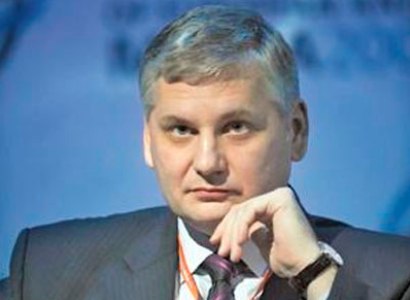
Armenian Genocide recognition by US House will not make Armenia into West-oriented country, Russian expert Sergei Markedonov wrote on his article published in the Kommersant newspaper, commenting on the recognition of the Armenian Genocide by the US House.
“Two of the four borders are closed, and the military ally is not an overseas power, but Russia, whose neat line to maintain the status quo in Nagorno-Karabakh keeps South Caucasus from a new large-scale conflict,” he noted “Add the economic ties between Yerevan and Moscow, and it will become clear: whoever comes to power in Armenia and whatever “velvet” accompanies the revolutionary processes there, any politician in this country cannot ignore the “wind” from the north.”
According to him, no matter how different the views of Yerevan and Ankara are on the prospects for a Karabakh settlement and assessment of the past, Armenia’s participation in the CSTO is a symbol of alliance with Russia, which Turkey cannot ignore.
"There have been no relations between Ankara and Yerevan since the collapse of the USSR. And it is unlikely that the adoption of a resolution will change this,” he added.
According to him, the adoption of the Armenian Genocide resolution in the US can tell a lot about the features of American foreign policy and firstly about the constant struggle of two discourses - value and pragmatic.
“The topic of the Armenian Genocide has been raised in the US for several years. On the one hand, its instrumental use is obvious.
As soon as Ankara’s behavior raised questions in Washington, this diplomatic weapon was used,” he added.
As the expert noted, the history of the October resolution “will give us a lot to understand Armenian politics”.
“Nikol Pashinyan called the decision of the House of Representatives “a bold step”. This explains to us the interest of Yerevan in the West, demonstrated, by the way, by all the leaders of Armenia, including Pashinyan’s opponents, like Robert Kocharyan,” Markedonov noted.
According to the expert, the adoption of the resolution is also useful for understanding the driving motives of Turkish politics.
“Ankara also has its own logic. Turkey in nowadays is not the successor of the Ottoman Empire, the collapse of which was accompanied by numerous excesses and tragedies. A tough reaction to the discussion of these topics is dictated not only by the unwillingness to pay the bills of the past, but also by the fear of precedents,” he added. “We say “Armenians,” “Greeks,” but we mean “Kurds,” Turkish politicians could formulate such a scheme. Moreover, the Kurdish issue today is not a separate operation, but in many ways the viability of the Turkish state project. It is not the only one , of course, but it is important for Ankara.
The expert concluded that the adopted document becomes a mirror for many countries and politicians.
“Gazing into it is important not for narcissism, but for learning useful lessons!” Markedonov concluded.