make preferable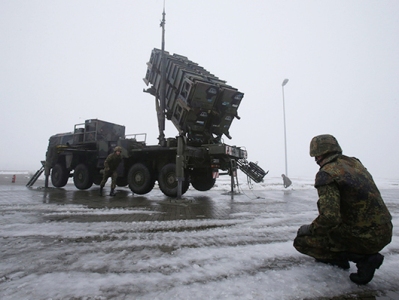
Japanese Defense Ministry announced the cancellation of the plan for two expensive US missile defense systems aimed at strengthening the country's potential against threats from North Korea, AP reported.
Defense Minister Taro Kono told reporters that he decided to “stop the deployment process” of the Aegis Ashore systems after it turned out that the safety of one of the two systems could not be achieved without equipment upgrades that would be too time-consuming and expensive.
"Considering the cost and time it would require, I had no choice but judge that pursuing the plan is not logical,” Kono said.
The Japanese government in 2017 approved the deployment of two missile defense systems to strengthen the country's defense.
"The plan to deploy the two missile defense systems already had faced a series of setbacks, including questions about the selection of one of the sites, repeated cost estimate hikes that climbed to 450 billion yen ($4.1 billion) for their 30-year operation and maintenance, and safety concerns that led to local opposition," the AP noted.
Critics also say that systems were supposed to intercept North Korean long-range missiles from hitting Guam or Hawaii, rather than being installed for the sake of Japan's self-defense, which would probably be contrary to the constitution of a country that refused to war.
Kono said Japan had already spent $ 1.7 billion on systems, but that not everything will go to waste, because the system is compatible with those used on Japanese destroyers.
Ultimately, it was the failure to guarantee the safety of the community in Yamaguchi that became the decisive factor.
Ministry of Defense officials promised that any launch vehicles to intercept a missile flying over Japan would fall only at a military base, and ensuring the launch vehicles could fall safely at the base was not possible with the current system design, Kono said.