make preferable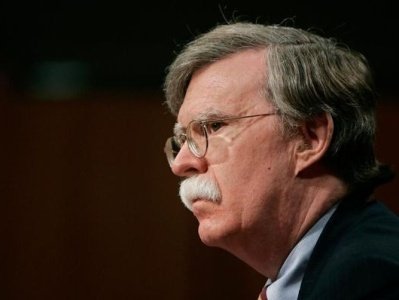
Turkish President Recep Tayyip Erdogan had a rather strong influence on US policy in Syria and other countries, former national security adviser John Bolton revealed in his book ‘The Room Where It Happened’, which is due to be published next week.
According to Ahval, it has obtained a copy of the publication.
The book notes that Erdogan’s frequent calls to Trump were very effective in forcing the US president to do what Ankara wants, although he also failed on several fronts - including the extradition of Islamic preacher Fetullah Gulen, as well as efforts to force the US authorities to withdraw charges from the Turkish state Halkbank, accused of participating in a complex scheme to circumvent sanctions on Iran from 2011 to 2016.
Bolton said that during a meeting between Erdogan and Trump in Argentina on December 1, 2018, the US president promised to try to help his Turkish counterpart in the Halkbank issue:
“Erdoğan provided a memo by the law firm representing Halkbank, which Trump did nothing more than flip through before declaring he believed Halkbank was totally innocent of violating U.S. Iran sanctions. Trump asked whether we could reach Acting U.S. Attorney General Matt Whitaker, which I sidestepped. Trump then told Erdoğan he would take care of things, explaining that the Southern District prosecutors were not his people, but were Obama people, a problem that would be fixed when they were replaced by his people.”
Bolton, in his book, calls this “nonsense” because “the prosecutors were career Justice Department employees, who would have proceeded the same way if the Halkbank investigation started in the eighth year of Trump’s presidency rather than the eighth year of Obama’s. It was as though Trump was trying to show he had as much arbitrary authority as Erdoğan, who had said twenty years earlier as mayor of Istanbul, “Democracy is like a streetcar. You ride it to the stop you want, and then you get off.”
Then Trump, according to Bolton, said: “He didn’t want anything bad to happen to Erdoğan or Turkey, and that he would work very hard on the issue. Erdoğan also complained about Kurdish forces in Syria (which Trump didn’t address) and then raised Fethullah Gülen, asking yet again that he be extradited to Turkey.”
“Trump hypothesised that Gülen would only last one day if he were returned to Turkey. The Turks laughed but said Gülen needn’t worry, since Turkey had no death penalty. Fortunately, the bilateral ended shortly thereafter. Nothing good was going to come of this renewed bromance with yet another authoritarian foreign leader.”
A few months before this meeting, after Trump met with Russian President Vladimir Putin in Helsinki in July 2018, Erdogan called Trump to talk about American pastor Andrew Branson, who spent two and a half years in prison in Turkey, and his supposed “relationship” to Gülen.
Bolton continued:
“Erdoğan also raised another favourite subject, frequently discussed with Trump: the conviction of Mehmet Atilla, a senior official of the state-run Turkish bank Halkbank, for financial fraud stemming from massive violations of our Iran sanctions. This ongoing criminal investigation threatened Erdoğan himself because of allegations he and his family used Halkbank or personal purposes, facilitated further when his son-in-law became Turkey’s Finance Minister. To Erdoğan, Gülen and his “movement” were responsible for the Halkbank charges, so it was all part of a conspiracy against him, not to mentioned against his family’s growing wealth. He wanted the Halkbank case dropped, unlikely now that U.S. prosecutors had their hooks sunk deep into the bank’s fraudulent operations. Finally, Erdoğan fretted about pending legislation in Congress that would halt the sale of F-35s to Turkey because Ankara was purchasing Russia’s S-400 air defence system. If consummated, that purchase would also trigger mandatory sanctions against Turkey under a 2017 anti-Russia sanctions statute. Erdoğan had a lot to worry about.”