make preferable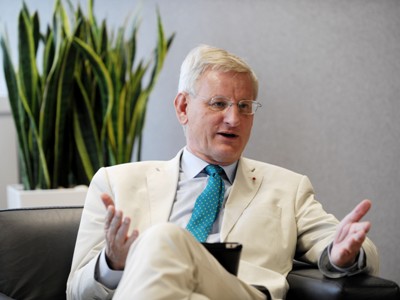
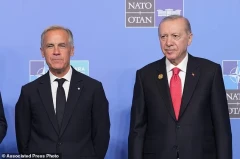
Turkish President Recep Tayyip Erdogan is resorting to public spectacles such as the re-opening of Hagia Sophia as a mosque to distract attention from his waning support and mismanagement of the economy, said Carl Bildt, co-chair of the European Council on Foreign Relations, Ahval reported.
But despite Erdogan's efforts, Turkey is entering an acute phase of political and financial turmoil, Bildt writes in an article for Project Syndicate.
By converting Hagia Sophia into a mosque and planning Islamic prayers there in front of cameras, Erdogan is trying to signal fundamental changes for Turkey, which was founded on secular principles, and to demonstrate his political power and the power of the ruling Justice and Development Party.
“For now, it is obvious that the country is heading for a political and financial bust-up,” Bildt said, citing Erdoğan’s loss of more liberal, urban Turks, which are leaving him in droves, a faltering debt-laden economy and the decision of former political allies to set up rival parties to challenge him in elections, due by 2023.
“With his support eroding, it is unlikely that Erdoğan could survive another election, even with the aid of the AKP’s current coalition partner, the far-right Nationalist Movement Party (MHP). Shoring up the religiously conservative nationalist base with gambits like Hagia Sophia’s reconversion is unlikely to help much.”
Meanwhile, according to Bildt, Turkey's economy is heading towards a possible crisis.
“Turkey has a brewing economic crisis, owing to rising fiscal and external deficits, which are being sustained with massive amounts of credit from state-owned banks,” he said. “The debt burden was already a big problem before the COVID-19 pandemic and is sure to become worse now. A recent $15 billion loan from Turkey’s sometime-ally Qatar will help for a while. But the current situation cannot – and therefore will not – last.”
Bildt noted a political break in Turkey has now become inevitable and it is just a question of what form the transformation will take.
“That could mean a smooth transition to a less centralised governance arrangement and a return to the path of modernisation and alignment with Europe, which is what Turkey’s friends should be rooting for,” Bildt said.
“But, now that Erdoğan knows his regime’s days are numbered, Turkey could also be heading for a more dramatic and disturbing scenario. One cannot rule out the possibility that Erdoğan simply refuses to accept an unfavourable verdict by the electorate.”