make preferable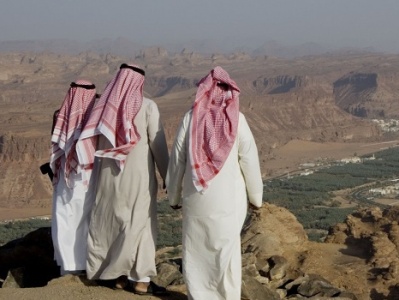
Saudi Arabia is rolling back its famous chequebook diplomacy, a long-standing policy of injecting petrodollars in exchange for an influence that observers say has not produced tangible results, AFP reported.
For decades, the wealthy kingdom has channeled billions of dollars to help its allies and the enemies of its enemies in an effort to bond its position as an Arab power and leader of the Muslim world.
But as the sharp drop in demand has led to shrinking oil revenues, the kingdom is rethinking old alliances that Saudi observers say were swallowing money with little to offer in return, while Riyadh's quest for regional supremacy increasingly clashes with rivals Iran, Turkey, and Qatar.
A swathe of regional countries, from Jordan and Lebanon to Egypt, Palestine and Pakistan, have been the top recipients of Saudi aid over the past decade, said Middle East expert Yasmine Farouk, said Middle East expert Yasmin Farouk.
"The dual economic impact of the coronavirus and low oil prices, however, may lead Saudi Arabia to restructure and rationalise its aid," said Farouk, from the Carnegie Endowment for International Peace.
"The country is already seeking to end the perception of being 'an ATM'."
The kingdom has invested billions in rebuilding Lebanon after the civil war, but has expressed frustration over its failure to curb Hezbollah.
"Saudi Arabia will not continue to pay Hezbollah's bills, and the Lebanese have to shoulder their responsibilities towards their country," Saudi columnist Khalid al-Sulaiman wrote recently for the pro-government Okaz newspaper.
"It is no longer possible for Saudi Arabia to continue paying billions to Lebanon in the morning and receive insults at night.
"This situation is no longer compatible with the new Saudi foreign policy, as Saudi money does not fall from the sky or grow in the desert."
Saudi Arabia is also disenchanted with Pakistan as the latter is pushing Riyadh to take a firm stance on the disputed Kashmir region and threats to raise the issue in other Muslim forums. Such a threat is especially unpleasant for Saudi Arabia, which is home to the most sacred sites of Islam and considers itself the leader of the Muslim world.
A diplomatic source told AFP that the kingdom recently withdrew $ 1 billion from a $ 3 billion loan from cash-strapped Pakistan, and an expired multi-billion dollar oil loan to Islamabad has not been renewed.
"Pakistani elites have a bad habit of taking Saudi support for granted, given what Saudi has done for Pakistan over the decades," tweeted Ali Shihabi, a Saudi author and analyst.
"Well the party is over, and Pakistan needs to deliver value to this relationship. It's no longer a free lunch or a one-way street."
Riyadh's ties with Pakistan have historically been “very warm,” but the relationship has been one-sided, Saudi Arabia's Prince Talal bin Mohammad al-Faisal said.
"It (has) only benefited one side in 'real world' terms," he tweeted.
"That side is Pakistan."
Pakistan and Egypt, another billionaire ally, have rejected calls for troops to support the Saudi-led military campaign in Yemen.
Further fueling the confusion in Riyadh, a leaked 2015 audio recording showed Egyptian President Abdel Fattah al-Sisi making fun of the Gulf powers, including Saudi Arabia, saying they ride on money like cheese in butter.
This view was echoed in 2018 by US President Donald Trump when he received Crown Prince Mohammed bin Salman in the Oval Office and showed a chart listing billions of dollars in military hardware sales to Riyadh.
"Take their money," Trump told NBC News the following year, justifying his support for the kingdom's rulers after the assassination of journalist Jamal Khashoggi caused a worldwide outcry.
Observers say Riyadh is struggling to win respect, and its once leading role in the Muslim world is increasingly questioned by its rivals.
Farouk said the Saudis are increasingly unhappy with their “ungrateful” allies.
States that have traditionally received lavish infusions from Saudi Arabia, including Jordan, Lebanon, and Palestine, have "already seen instances in which aid was frozen, decreased or cut off", she added.