make preferable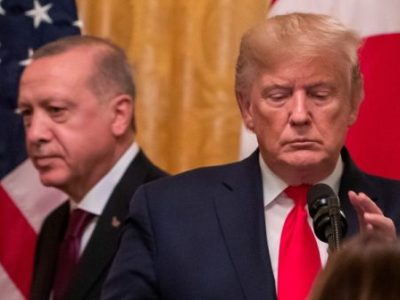
The re-ignition of the tensions between Azerbaijan and Armenia over Nagorno-Karabakh into violence puts the United States and Turkey on opposite sides of a dispute, but not as most observers would see it, writes Edward Stafford in his article on Ahval portal.
“This is not a case of Turkey under President Recep Tayyip Erdoğan supporting one nation-state and the United States under President Donald Trump supporting another, but of Erdoğan supporting the stated goals of one party and Trump supporting a multi-lateral negotiated resolution of the conflict.
Regardless of the appeals from the influential Armenian lobby in the United States, the White House has eschewed choosing the Armenian side and instead has joined with Russia and France calling for negotiations. This is not as strange as it seems.
President Erdoğan also likely realizes that though Russian Foreign Minister Sergei Lavrov proclaims an unbiased approach to the two former Soviet republics, the linguistic, religious, and cultural ties between Moscow and Yerevan are likely perceived in Ankara and Baku as tilting the playing field towards Armenia.
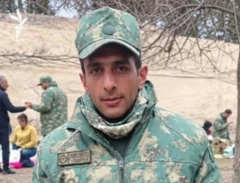
President Erdoğan saw the opportunity to counter the perceived or real tilt by Moscow towards Yerevan by lending support to Aliyev's claims and by reportedly supplying him with weapons, in particular drones, and irregular fighters drawn from Syria and elsewhere. Erdoğan also sees a chance to reduce Russia's influence in Azerbaijan, possibly reducing Turkey's dependence on Russian oil. Having multiple options for the importation of oil would be to Turkey's advantage.
Erdoğan's support for Azerbaijan also fits nicely into his self-image as the pre-eminent voice for all Muslims suffering at the hands of non-Muslims. And though this is muted when there is little benefit to speaking out (Uigurs in China, for example), Erdoğan likes to portray himself to his supporters as the Muslim political leaders speaking out and acting against the Islamaphobic Westerners.
For the United States, President Erdoğan's approach to the outbreak of violence in Nagorno-Karabakh is another irritant in the ongoing and increasingly difficult relationship with its fellow de jure NATO ally that behaves like a rival if not an adversary. Of course, several stridently anti-Turkey voices have declared that Turkey's actions in the Caucasus conflict proves, again, that it is an adversary and the US must treat it as such.
With little leverage in the Caucasus or in Ankara, and with a powerful Armenian lobby in the United States, including several pro-Armenia Congressmen, and no pro-Azerbaijan Congressmen who come to mind, the White House can do little more than advocate for negotiations in partnership with the Kremlin and the Elysee Palace.
For now, it appears that President Erdoğan will say he is for a cease-fire and negotiations but continue backing Aliyev regardless of the latter's actions, exacerbating Turkey's isolation from its Atlantic Alliance allies as well as demonstrating his independence of action to his domestic supporters. And, he'll do so with little fear of experiencing harsh consequences.
Russia will not strike the first military blow against Turkey nor allow Armenia to do so as long as Turkey remains within NATO. No, if the Russian bear bares its fangs and unsheathes its claws, it is the Azerbaijanis or some other client or proxy of the AK Saray's chief that will bleed. As for economic sanctions by the United States or others, they would only allow Erdoğan to shift the blame for Turkey's financial crisis under his tutelage from himself to outsiders.