make preferable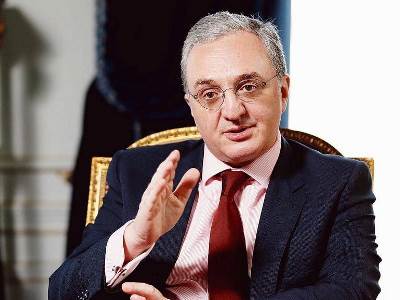
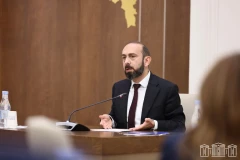
Armenia has always supported the idea of sustainable monitoring of the ceasefire regime, which was introduced into the peace process by the co-chairs of the OSCE Minsk Group immediately after the April 2016 escalation, Armenian Foreign Minister Zohrab Mnatsakanyan wrote in an interview with Sputnik International.
Armenia and Azerbaijan came to an agreement on expanding the OSCE monitoring group and approving a mechanism for investigating the ceasefire regime, but Azerbaijan subsequently refused to implement this agreement.
This indicates that neither yesterday nor today Azerbaijan is not interested in establishing a stable and controlled ceasefire.
Our position remains unchanged, and we are in favor of the deployment of observers, Mnatsakanyan said.
When asked when the implementation of verification mechanisms is expected, what is hindering this and whether Armenia is considering the option of holding a meeting in Moscow in the near future around the issue of these very mechanisms, if so, then approximately when, the Armenian Foreign Minister noted that the Russian , Armenia and Azerbaijan FMs on October 10 agreed on a joint statement, the alternating provisions of which represent a roadmap for implementation.
Above all, three provisions must be implemented immediately and without preconditions, which provide for a ceasefire, the development of ceasefire standards and the exchange of prisoners of war and bodies. The main obstacle in the negotiations is Azerbaijan's unwillingness to establish a stable and controlled ceasefire. Baku has been continuously refusing to introduce verification mechanisms, while at the same time promoting its long-standing position on abandoning a stable ceasefire and voicing mutual accusations.