make preferable
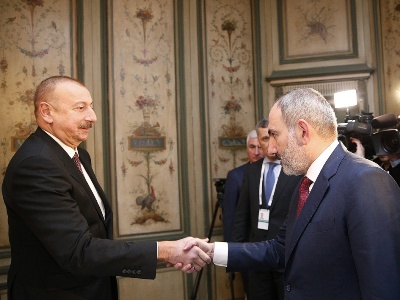
Politik.am of Armenia writes: The issue of captives has been a major headache for these authorities since the end of the [recent Artsakh (Nagorno-Karabakh)] war. The existence of captives continues to be important evidence that these authorities are incapable of doing anything. The authorities are well aware of this, and they try to blur their own unproductiveness, incapacity, and weakness by bringing various reasons.
At some point, the authorities began to use the captives’ circumstance also to arouse anti-Russian sentiment. Shortly after the end of the war, the authorities completely put on the Russian side the obligation for the return of the captives. Relatives of the captives and missing people were sent to the Russian embassy on various occasions. Now the public has higher expectations from the Russian side itself.
The recent false information disseminated recently by the authorities about the return of the captives has further intensified the passions. It should be reminded that the news outlet affiliated with [parliament deputy speaker] Alen Simonyan reported on April 8 about the return of the captives. All the government media, including the Western-funded media, rushed to cover the event live.
Following the publication by the government media, the return of the captives was confirmed by Prime Minister Nikol Pashinyan's spokesperson Mane Gevorgyan and Deputy Prime Minister Tigran Avinyan's office (Avinyan is in charge of the return of the captives). Hours later, it turned out that there were no Armenian captives on the Russian plane that arrived at Erebuni Airport [in Yerevan]; moreover, it turned out later that the plane was not coming to Yerevan from Baku at all, but from Russia.
When it became clear that there will be no captives, NA [National Assembly] vice speaker Alen Simonyan hurried to inform one of the media outlets that, actually, there was no arrangement on the return of the captives that day. According to Simonyan, there was just a hope that this flight would bring good news with it and it would be possible to transfer captives to Armenia.
Despite Alen Simonyan 's claims that they did not have such information, another member of the ruling force, Andranik Kocharyan, claimed the next day that there was an arrangement: "... you saw for yourself that [Rustam] Muradov [commander of the Russian peacekeeping contingent that is stationed in the Nagorno-Karabakh conflict zone] should have been on the plane, and he was; and means that there were arrangements that were violated. The reasons not available. If you want me to say in the field of assumptions, the opposing side once again wants to change the rules of the game."
Andranik Kocharyan's statements were followed by a propaganda campaign against Russia by deputy head of the Avan district [of Yerevan], other members of the ruling team, and Styopa Safaryan, who was appointed to the post of Chairman of the Public Council by the Prime Minister, and Western-funded media. The government propagandists were claiming that not to return the captives was a provocation carried out by the Russians.
The obvious lie about the return of the captives by the authorities raised such a wave that the commander of the Russian peacekeepers in Artsakh, General Muradov, had to state—in a conversation with one of the media—that the return of the captives was not planned and the information in the media was a provocation after the Armenian authorities.
It is interesting that parallel to Armenia, anti-Russian sentiments have started in Azerbaijan, too. Protests are taking place in Azerbaijan these same days in front of the Russian embassy. Radical Azerbaijanis demand that the Russians leave Artsakh. These are processes that are certainly not coincidental.