make preferable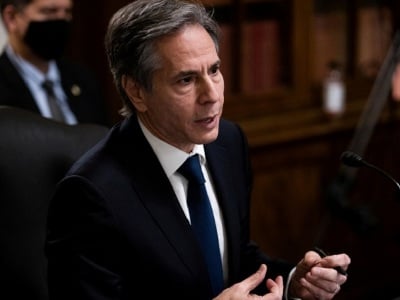
The United States and the European Union are working to protect energy supplies to Europe "against shocks stemming from the Ukraine crisis," US Secretary of State Antony Blinken said.
His remarks came during a briefing with EU foreign policy chief Josep Borell.
"We're coordinating with our allies and partners, with the energy sector stakeholders, including on how best to share energy reserves in the event that Russia turns off the spigot or initiates a conflict that disrupts the flow of gas through Ukraine," Blinken said.
He promised "real and profound consequences if Russia decides to continue its aggression."
“We developed a high-impact, quick-action response that would inflict massive costs on the Russian economy and financial system including sanctions and significant export control,” Blinken said, adding that the EU is preparing “complementary” actions.
Those efforts include surge energy supplies and sharing energy reserves, he said.
“We and our allies and partners are united across the board,” Blinken said.
“When Russia halted gas supplies over a dispute with Ukraine in 2009, people died from the cold. And when energy supplies fail, economies falter,” he said. “We’re determined to prevent that from happening and to mitigate the impact on energy supplies and prices should Russia choose to cut natural gas supplies to Europe more than it already has.”
Borrell said the US and EU partners have been in “speed-dial mode,” coordinating a response to the threats posed by Russia in Ukraine.
He stressed that the goal was to become carbon-neutral while addressing short-term security risks in the context of the “Russia and Crimea crisis.”
“Russia doesn’t hesitate to use the significant energy supplies to Europe as leverage for geopolitical gains,” he said. “And when gas prices in the European Union from 6 to 10x higher than they were one year ago...this has a major impact on consumers” and the economy.”
Borrell said it’s important for nations to diversify the sources of energy, and to do so by transitioning from fossil fuels to renewables. “It is the best way of facing the challenge of climate change.”
“We believe that the diplomatic way out of the crisis is still possible and this is our clear and first priory and that’s what we are investing all our efforts. But at the same time we remain firm in our resolve that further aggression against Ukraine would have...major consequences.
We hope for the best but prepare for the worst. Should Russia continue on a path of aggression, European Union and United States actions will be closely aligned, including on sanctions,” he assured.