make preferable
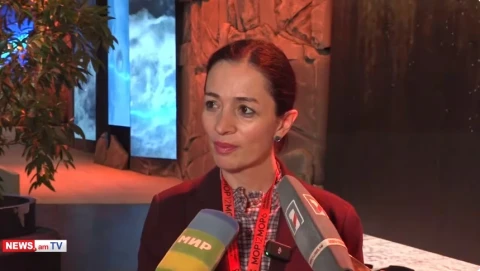
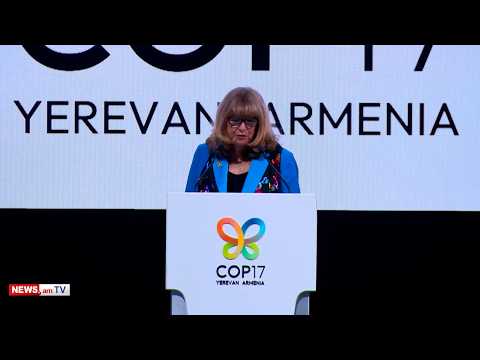
Former President and Foreign Minister of Switzerland Micheline Calmy-Rey gave an exclusive interview to NEWS.am. She was the Foreign Minister of Switzerland when the Armenian-Turkish normalization process launched: Switzerland officially mediated the talks then and well-known Armenian-Turkish Protocols were signed on October 10, 2009 in Zurich. Micheline Calmy-Rey talked to NEWS.am about the period of “Football Diplomacy”, the current geopolitical situation in the South Caucasus and the perspectives of ongoing normalization process between Armenia and Turkey.
During the normalization process of 2007-2009 and after the signing of the Zurich Protocols Turkey was permanently insisting on the formation of joint history commission seeking to push out the issue of the Armenian Genocide and its recognition from the international agenda and was linking the normalization process with the Nagorno-Karabakh conflict. Armenia was insisting on the establishment of diplomatic relations and the border opening without preconditions suggesting that other important issues be discussed later at the interstate level. The states that supported normalization process were also stressing that it’s necessary to move forward without preconditions and not to suspend the ratification process. You, as the Minister of Foreign Affairs, as the President of Switzerland, were among those who called to take additional steps towards normalization then․ The Zurich Protocols were not ratified, the process failed. What do you think, what was the main reason Turkey decided to put forward those preconditions and refused to establish diplomatic relations and open the border first and only after that discuss all other issues?
Thank you for the question. You know at that time Armenia and Turkey had and still have no diplomatic relations, and your country’s border remains closed.In 2007 Armenia and Turkey with good reasons for wanting to break this deadlock asked Switzerland to undertake a historical study of the tragic events in the end of the Ottoman Empire on one hand, on the other hand, to facilitate a broader process with the goal of normalizing bilateral relations between Armenia and Turkey. Switzerland responded positively given its interest in lasting stability of the Caucasus. For Turkey and Armenia normalization of relations required an immense effort and unfailing political carriage, and for both the political feasibility of resuming normal relations internally and externally was not given due to various factors. First of all, Turkey and Armenia are culturally different and have different perceptions of history. That difference in perceptions regarding the Genocide question is fundamental to a certain degree identity-related. The situation is not satisfactory for either side: Turkey face accusation of the Armenian Genocide and a problem with an immediate neighborArmenia is experiencing economic difficulties because of its border with Turkey being closed. In the background of the relationships the Nagorno-Karabakh question. The Swiss diplomacy deliberately left the question out of the negotiations focusing on technical points such as how to open the border and how to facilitate economic relations and how to establish a historical commission as a first step for both parties to deal with the past. The omission of Nagorno-Karabakh caused thefailureof the Zurich Protocols as this highly political question raised its head at the concluding stage of the negotiations. Let me say something about the signature. So, I was in Zurich, the texts of the Armenian and Turkish speeches were reread by each of them – the Turkish one and the Armenian one - and it turned out that they were wholly unacceptable to the other (it was not the protocols, but the speeches of the ceremony): one to speak about the 1915 and the Armenian Genocide which was unacceptable for the Turks and other to make a connection with Nagorno-Karabakh. Shortly before 5 p. m. when most of the delegations were on side, Hillary Clinton’s car suddenly turned around, the American Secretary of State decided to return to the hotel where she had quarterEdward Nalbandyan, the former Foreign Minister of Armenia, was waiting for her there. I locked myself in the University’s office with Ahmed Davutoglu who was at that time Minister of Turkey and his delegation. Then a long diplomatic battle began between the delegations in an attempt to correct the text. I proposed to sign the protocols without any comments - neither Turkish, nor Armenian. Everybody was busy, the ministers tried to arbitrate, you can imagine there were a moment of terrible tension, and finally with more than 2 hours delay, a few hesitation, telephone calls to the presidents to have seen their mind and the insistence of international sponsors (there were Hillary Clinton, Sergey Lavrov), everyone rushed in the ceremony room, protocols were signed without any speech except for a short introduction on my part. The negotiations about the Zurich Protocols were very difficult. The Zurich Protocols involved two linked protocols: the one relating the opening of the border, the other relating to the establishment of a historical commission. Really, the negotiations were very long. Switzerland committed itself as a mediator, proposed best thoughts, solutions, Armenia and Turkey committed themselves to negotiate and agreed on the role given to Switzerland. The negotiations lasted 3 years: many meetings were held, you reminded before the meeting with Mr. Barack Obama in Istanbul, there really were a lot of meetings within international conferences in Davos, in World Economic Forum, in Berlin, in Istanbul, and our Swiss mediation ended in October 2009 with the signing of the protocols. But the lessons learned we have to acknowledge: mediation is not a technical issue, it’s not enough to find the right words, reasonably acceptable compromises, it’s necessary to give a confidence and show infinite patience without any guarantee about the issue. The experience also underscores the importance of politics, once the Nagorno-Karabakh conflict was raised by Turkey at the instigation of Azerbaijan after the signature of the protocols. The ratification was no longer possible.
Azerbaijan opposed the normalization process putting serious pressure on Ankara. Turkish then-President Gül, Prime Minister Erdogan, Foreign Ministers Babacan and Davutoglu paid numerous visits to Baku to give Azerbaijan's leadership guaranties that the final normalization would be impossible without the settlement of the Nagorno-Karabakh conflict assuring that Azerbaijani's interests wouldn't be shadowed. Azerbaijan condemned the signing of the protocols in October saying that it was in direct contradiction with its national interests. Moreover, a dispute emerged on the prices and export of natural gas from Azerbaijan to Turkey then. Was Azerbaijan’s pressure the crucial reason that made Turkey to hold on its firm positions, or there were other factors affecting Turkey’s position?
- No, as I said to you, Azerbaijan came at the end after the signature of the protocols and made some pressure on Turkey and said we are not your friend anymore if you ratify these protocols. So, you know the relations between Azerbaijan and Turkey, and Turkey renounced to ratify the protocols, this was the reason. The fact that we didn’t want to take on the mediation the question of Nagorno-Karabakh was accepted by both parties - by Armenia and Turkey. It was only after the signature that the Nagorno-Karabakh question came again.
- The protocols were eventually signed and it wasn’t followed by any statements by both sides as it had been agreed due to the efforts of the mediators. Didn’t that episode raise any concerns about the future of the protocols, did you really see any chances that the protocols would finally be ratified and diplomatic relations would be established, or were there any doubts and risks then?
No, I was very confident that the protocols could be ratified because they were signed and were accepted by the Armenian and Turkish Presidents, they were supported by the United States, by Russia, it was an interest both of Armenia and Turkey: the economic interest of Armenia because the land is locked, the border is closed with Turkey and Azerbaijan, the normalization was in interest of Armenia, but was also of Turkey, because it could increase its influence in the Caucasus region, and it was also in the interest of Turkey. So, it was a win-win agreement, it also tackled the question of the Genocide, and Turkey for the first time accepted the international commission of experts on this question. So, we were confident that 2 protocols could be ratified, but it didn’t happen because, as I said and once again I repeat, the political questions came after the signature at a times Azerbaijan read the protocols and said: “What are Armenia and Turkey doing?”, trying to intervene in ratification process and said to Turkey that you cannot do that, and after that Armenia didn’t ratify either.
The geopolitical situation has dramatically changed in the South Caucasus during the last decade specifically after the Second Karabakh war. Armenia lacks the position and the opportunities it used to have back in 2009. The policy of Turkey has also been changed in terms of its growing geopolitical ambitions and the new and more influential role it has gained in the South Caucasus following its huge assistance to Azerbaijan during the war. Azerbaijan seeks to capitalize the results of the war and is constantly pressing on Armenia into making concessions. Russia is more actively and directly engaged in the regional processes not only in terms of peacekeeping mission in Artsakh but as a mediator of the ongoing talks between Yerevan and Baku. Moreover, a regional platform named 3+3 has been launched: Russia, Turkey, Iran, Armenia and Azerbaijan are involved in this format now, Georgia has rejected to take part yet. So, how does such kind of regional transformation influence the ongoing negotiations between Armenia and Turkey?
After the Second Karabakh war the ground realities changed. There is a huge gulf between the Armenian and Azeri positions. As far as Azerbaijan is concerned the conflict is over and there can be no compromise on territory. In Armenia’s view the independence of Nagorno-Karabakh remains a primary objective; I think you agree what I’m saying now. It’s far too early to think about any sustainable solution, for example a peace agreement to this issue. However, in the absence of sustainable political agreement peace remains a distant hope on the horizon. The ceasefire agreement signed on November 2020 doesn’t settle the final status of the territory, indeed regarding the statements concluding the meetings on November 2020, November 2021 focused on borders demarcation and mobility issues, and in addition also the Moscow summit on January 11, 2021 focused on establishing the rights, economic solutions by unlocking transport roots, rebuilding infrastructure, rebuilding infrastructure, creating interlinkages between various countries involved. No sustainable solution for the short time, that is the situation now.
Is it more realistic that Armenian-Turkish normalization can become a reality this time, are there more chances compared to the period of Football Diplomacy or not?
In today’s normalization process the issue of Nagorno-Karabakh like in 2008 and 2009 is out because of different reasons, not the same. In 2008 it was the will of the parties not to tackle these issues but to stay on technical issues. Now it’s different because in the eyes of Azerbaijan the situation on territory is solved, they won the war and there is no issue focusing on the territory. It’s difficult to foresee any meaningful dialog on Nagorno-Karabakh without the re-establishment of diplomatic relations between Armenia and Turkey and a genuine political dialogue, even normalization between Armenia and Azerbaijan. As you know, Azerbaijan and Turkey have very close relationship in every aspect, and that’s why in case of both Armenia-Azerbaijan and Armenia-Turkey relations one of the main stumbling blocks, in my mind, is the lack of recognition of the Armenian Genocide on the part of Turkey, it’s still not solved. In normalization process it’s not on the table, it’s done without preconditions. In 2009 a beginning of the solution was seen with the establishment of the international commission of experts in charge of examining history. But the Nagorno-Karabakh issue remains unsolved, and the Zurich Protocols were never ratified for this reason. Today the territory question seems to be resolved at least in the eyes of Azerbaijan, but the question of the recognition of the Armenian Genocide remains open. I think it’s correct to focus now on the normalization of relations between Armenia and Turkey. In the eyes of the Turks the question of the territory is solved, but was not a case in 2008, so, the normalization process has better chance today. Even if a sustainable peace is not in a very near horizon, it must be an appropriate transition period before any political settlement can be implemented.
The Special Representatives of Armenia and Turkey have already had two meetings- the first one in Moscow this January, and the second one a few days ago in Vienna. After these meetings the same statements were issued by both sides reiterating their agreement to continue the process without preconditions. But there is a great concern in Armenia that Turkey will again put forward preconditions at some point. Is there any way to avoid such a scenario? How much do you think the asymmetry between Armenia’s and Turkey’s capabilities will affect the possibility of reaching mutually beneficial solutions?
I want just to say some words about the transition period, why I say it’s necessary a transition period before a settlement can be implemented. It should be recognized that the present territorial situation should be preserved for some years and a referendum in Nagorno-Karabakh territory at the end of this transition period could be organized. During the transition period there will be issues such humanitarian relief, repatriation, rebuilding of infrastructures, economic relations should be developed.
Along with France, the United States formally remains a mediator of the conflict as one of the Co-Chairs of the Minsk group with Russia. There is little to talk about the political side at the present with a final Armenian-Azerbaijani peace agreement still follows the priority of short term. The difficulty in promoting dialogue, reconstruction, demining, economic exchange difficulties here are lying in closed borders in the fact that borders are closed between Armenia and Turkey. I think the normalization process is in interest of both countries. Yerevan is now excluded from major energy and transport projects in the region - the South Caucasus gas pipeline, Baku-Tbilisi-Kars railroad. With its border opened Armenia would have easy access to Turkish and European markets because of the closure of Turkish and Azerbaijani borders. Your country is forced to use longer and more expensive mountainous routs via Georgia and Iran. For Turkey also the positive aspect of that normalization process is a biggest influence in the South Caucasus. I mean both parties have an interest, but one of the obstacles is the closed border.
One more word about the Minsk group. I know that Armenia continues to invest its hope in the Minsk group and the OSCE. The Minsk group is badly discredited as it has produced no tangible progress in nearly 3 decades of efforts, but it is still the only game in town in terms of providing an international mechanism for resolving the differences and for dialogue. Armenia does indeed have every reason to seek the support of the OSCE and the Minsk group especially since Armenia lost the war and sitting in an unfavorable position at the negotiating table (So, I wanted to say that to see what are the forces in present around the table).
Today’s attempt is probably more promising than the previous one: it’s without conditions, the subject of contention – the Genocide – it is not on the agenda, I’m sorry to say that but we putted it in the agenda in 2008, 2009, but now it’s not anymore in the agenda. The Second Karabakh war changed the situation on the ground and this may, however, come up against an obstacle: the opening of a road and rail corridor known as “Zangezur” corridor will allow Turkey to have a land continue with Azerbaijan, it’s what Turkey wants, and the project is impossible to realize without the approval of Armenia since this corridor in question pass through the southern region of Zangezur, and Armenia,is hardly in favor of this. Baku wants to control the corridor and its security, if that becomes a condition despite Armenian objections, then the talks could fail. So, I think you have better chances to normalize, but some obstacles are on the road.
After 2009 many countries recognized the Armenian Genocide. The two chambers of the US Congress adopted resolutions in 2019 recognizing the Armenian Genocide, and President Biden recognized the Genocide in his April 24 message last year. How has these recognitions by the US changed the situation around the Armenian Genocide and how can it influence the current process between Yerevan and Ankara?
It’s difficult for me to say, but it’s difficult to imagine a successful initiative coming from Turkey: I talked a lot with the Turkish delegation during the negotiations of the Zurich Protocols, and this was very, very, very sensible question for them. The only compromise we could find was the creation of sub-commission of international experts to examine from a scientific point of view the events of 1915. I have to say that it was a suggestion of Switzerland because Switzerland had to analyze also its role in the treatment of the Jewish people during World War 2, and we have done this with a historical commission. We had a debate in Switzerland on our role, what we have done, etc. And we thought that it could be the first step in the recognition from the side of Turkey.
So, what to do, if Turkey sets some preconditions concerning the Armenian campaign for international recognition of the Armenian Genocide or what if Turkey says it will unblock the regional infrastructures only after Azerbaijan’s demands are met by Armenia. Is Armenia to withdraw from the process? Set its own preconditions in response? How to avoid a possible deadlock, what does your mediation experience suggest?
I cannot say what if there are preconditions; there are no preconditions for the time being. So, let’s hope that the normalization process is in good way, I hope for your country, really. I was several times in Armenia, the last time was 2 years ago, I visited a lot of people and I saw that you are landlocked, it’s a not good situation for you, you need to be open to other countries and to be able to have some economic, and people could work, etc. I promise myself that if the normalization process is a success, I will spend holidays between Gyumri and Kars, I will come for one week to applaud to the success of the normalization process, because I have in my head all these difficult negotiations between Turkey and Armenia, but at the end you have also a lot of common interests in the region. I would say to you not to speak about retiring, stopping the negotiations, try to find a common ground and common solutions to your problems, and there will certainly be some.
What would be your advice to current negotiators, what to do in order to reach a mutually acceptable solution and what not to do in order not to avoid a deadlock?
I cannot give advices to your negotiators because you are defending your own interests and you better than I know what is very important for you in todays’ situation. Negotiations are always difficult; they need patience, sometimes take a long time, the first signature of the Zurich Protocols took 3 years of hard negotiations. Perhaps, you cannot expect to have success in 2-3 moths. Don’t go with preconditions, that’s always something that we can’t recommend to anybody to go into negotiations with preconditions, because otherwise you have to stuck to this positions and you can’t really discuss with some flexibility and making a step towards the other one. So, I really wish you good luck!
Hayk Sahakyan talked to Micheline Calmy-Rey