make preferable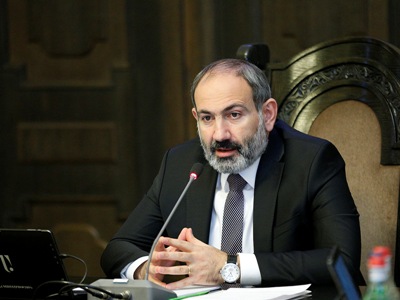
For three days now, the citizens of the Artsakh [(Nagorno-Karabakh)] Republic have been deprived of natural gas supply; this happened as a result of the interference of Azerbaijan. Prime Minister Nikol Pashinyan stated this at Thursday’s Cabinet meeting of the government of Armenia. He added as follows:
"As you know, on March 7, the [natural] gas pipeline supplying [natural gas] to Artsakh was blown up in an area under Azerbaijani control. Azerbaijan did not allow—under various pretexts—the gas pipeline to be repaired, and in the end, it repaired [it]. As a result, according to our information, a valve was installed on the gas pipeline, and on March 18—11 days later after restoring the gas supply to Artsakh for 4 days—on March 21, Azerbaijan simply closed the pipeline valve without explosions, thus proving that it was the one behind the March 7 explosion.
Of particular note is the fact that both [natural] gas outages occurred in exceptional [cold winter] weather conditions. (…). And in these conditions, Artsakh was deliberately deprived of the natural gas supplies that are vital for heating apartments, kindergartens, schools, hospitals. This is enough to realize that as a result of Azerbaijan's actions, Artsakh is on the verge of a humanitarian catastrophe. I have no doubt, of course, that the heroic people of Artsakh will overcome this ordeal as well.
But with this in mind, I must state that Azerbaijan also provides ‘service’ to the people of Artsakh with these actions of it because this episode in connection with the gas pipeline is the Artsakh issue’s very accurate and concise description for the international community. Thanks to this episode, the international community can understand the essence of the Karabakh issue without flipping through 100 pages, studying the nuances of history. This indisputably shows Azerbaijan's policy towards the Armenians of Artsakh; that is: to make it impossible for them to live in their own homeland.
For 1.5 years now, Azerbaijan is drumming up that it won a glorious victory in the 44-day war of 2020. But everything shows that the fact that after so much suffering and deprivation there are about 117,000 Armenians living in Artsakh right now, Azerbaijan considers its biggest defeat, and [therefore] a task has been set [by it] to do everything to complete the policy of ethnic cleansing in Artsakh."