make preferable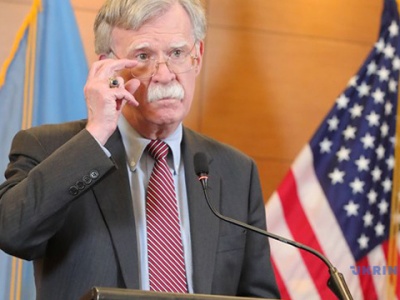
The regime of Turkish President Recep Tayyip Erdogan must be held accountable for undermining the country's core democratic institutions, a move that requires coordinated action by the international community, Former White House national security adviser John Bolton writes in the Washington Examiner.
“President Recep Tayyip Erdogan’s two-decade strongman rule has reversed his country’s progress toward a liberal society. On April 6, the Turkish president secured the passing of new electoral laws that will make it more difficult for smaller parties to enter Parliament, thereby inhibiting opposition coalitions and allowing him to use state resources to organize his own campaign events. These changes will make it harder for opponents to challenge Erdogan’s tightening grip on the Turkish electoral system," he said.
As Erdogan prepares for re-election in the coming year, the importance of a vibrant and functioning Turkish civil society cannot be overstated. And it couldn't be more in danger.
These changes are the latest in a series of moves designed to destroy what remains of Turkey's once promising democratic architecture. Erdogan's authoritarianism has provoked resistance in the form of an opposition coalition, the "Alliance of Nations" led by the Republican People's Party, while the dire economic, social and political situation in Turkey has catalyzed violent anti-government protests against inflation, women's rights and academic freedom.
The June 2023 elections will be the decisive test for pro-democracy supporters in Turkey to rebuild their institutions. Their success will depend on their ability to maintain the most vulnerable signs of a free and fair election in Turkey: transparency, non-interference in the vote, underdog consent and a free press.
They face a tough battle. The Erdogan regime has restricted access to the media, undermined the open electoral process through bribery, intimidation and violence, and is now trying to further obfuscate the voting process through overtly undemocratic reforms.
Under Erdogan, censorship laws have also been used as a weapon against political discourse on the Internet. The 2020 Media Law places requirements on social media platforms to remove content at the behest of the Turkish government or face fines. Facebook and Twitter have been censored by the Turkish government, closing off another avenue for healthy political discourse among Turkish voters.
In previous elections, the Erodgan government had carried out systematic campaigns of intimidation. In Ankara, local elections were marred by allegations of voter fraud. Kurdish communities in particular face acts of intimidation and voter suppression. The government is militarizing polling stations in the Kurdish region, arguing that security forces must protect against the threat of attack by Kurdish terrorists. Under the threat of intimidation by the state, the Kurds are deprived of the right to freely vote.
In what could be a premonition of the 2023 elections in 2019, Erdogan showed he was willing to intervene directly in democratic processes to try to stay in power.
He ordered the High Electoral Commission to re-run Istanbul's mayoral election after his party lost despite systematic irregularities that actually worked in its favour. Despite all his attempts to intervene, his party also lost the second vote.
The pandemic and the war in Ukraine have accelerated economic instability and domestic political upheaval. However, the free world cannot lose sight of the importance of the Turkish elections, which will be watched by many of the world's autocrats, eager to see what they can get away with. Erdogan has systematically undermined all of Turkey's core democratic institutions in order to create a highly skewed playing field.
Bringing his regime to justice requires coordinated action by the international community, highlighting his gangster tactics to suppress political minorities, and real consequences if he fails to make significant progress in restoring civil discourse in Turkey.
Progress here means releasing imprisoned journalists to restore some semblance of a free press, enabling NGOs to effectively monitor elections, and ending censorship of opposition political voices. The international community must apply the force of sanctions, as they did against Russia, and take harsh measures to prevent Erdogan from achieving these goals.