make preferable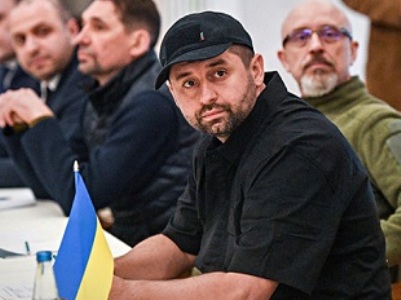
Up to 1,000 Ukrainian soldiers are being killed or wounded each day in the Donbas region of eastern Ukraine, with 200 to 500 killed on average and many more wounded, a top Ukrainian official said on Wednesday, Axios reported.
President Volodymyr Zelenskyy said on June 1 that 60 to 100 Ukrainian troops were being killed daily as Russia stepped up its Donbas offensive. Over the past two weeks that number has climbed significantly, according to David Arakhamia, chairman of the ruling Servant of the People faction of the Ukrainian parliament, who leads Ukraine's negotiations with Russia, and is one of Zelenskyy's closest advisers.
Ukraine has recruited one million people into the army and has the capacity to recruit two million more, Arakhamia said, so it has the numbers to continue the fight in Donbas, where Russia has been gradually gaining territory.
US Joint Chiefs Chairman Gen. Mark Milley was asked about the rate of Ukrainian casualties on Wednesday and said it was difficult to estimate but previous media reports of around 100 killed and up to 300 injured each day had been "in the ballpark of our assessments."
What Ukraine lacks, Arakhamia contended, is the weaponry and ammunition to match Russia in "one of the biggest fights of the 21st century." He said: "We have the people trained to attack, to counterattack, but we need weapons for this."
"Our negotiating position is actually quite weak, so we don't want to sit at the table if we are in this position. We need to reverse it in some way," Arakhamia said, stressing the need for a counter-operation to regain lost territory.
In a roundtable Wednesday at the German Marshall Fund, Arakhamia and other members of the delegation noted that while Biden had signed a $40 billion package to aid Ukraine in May, it was only very gradually translating into actual weapons shipments.
Meanwhile, Ukraine's partners—particularly in Europe—are beginning to focus on replenishing their own stockpiles rather than arming Ukraine, Arakhamia said. He noted that the German government was still very reluctant to approve export licenses to arm Ukraine, perhaps due to "internal fear" of Russia.
While formal negotiations are frozen, Arakhamia said he and his team speak by phone with their Russian counterparts "one or two times per week" to check in, even though "both sides clearly realize that right now, there is no place for negotiation."