Preferred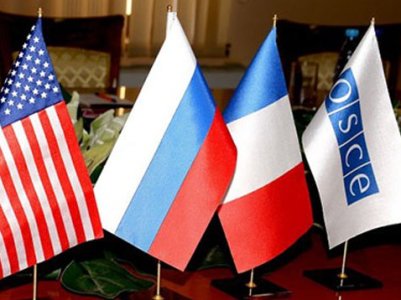
The Voice of America talked about the future of the format of the OSCE Minsk Group with former American diplomats James Warlick and Richard Kauzlarich.
The statements of Moscow and Baku regarding the format of the OSCE Minsk Group are quite contradictory, said the former American co-chair of the OSCE Minsk Group James Warlick. According to him, it seems that they no longer want to keep this format, but they do not put forward any alternatives, thereby transferring the process only to Russia. Unlike Moscow, Paris and Washington remain committed to the Minsk Group format, the former co-chair says.
The United States has made clear that the US government remains committed to the Minsk Group process. They went even further by appointing a new co-chair specializing in the Caucasus and the region, says Warlick.
Former US Ambassador to Azerbaijan Richard Kauzlarich agrees that the appointment of an American co-chair demonstrates Washington's commitment to this format.
The United States, in fact, is committed to the format of the Minsk Group. They appointed a new co-chair of the Minsk Group from the American side. Washington believes that this format is effective, he says.
According to former diplomats, Russia's invasion of Ukraine has made Russia's mission as a mediator problematic.
“The invasion of Ukraine made it clear that one cannot trust the word of Moscow, which for a long time insisted that it did not intend to violate the territorial integrity of Ukraine, but in practice it did the opposite. The Russian side must show that it is truly committed to a peaceful settlement and will act in the interests of all parties,” Warlick said.
“For me, Russia discredited itself as a mediator by invading Ukraine. I don't see how Russia can play a role in the Minsk Group,” Kazljaric said. According to Richard Kazlarich, however, given the particularly negative position of Azerbaijan towards the Minsk Group, it is difficult to imagine a return of peace talks to this format. Instead, the process is taking place within the framework of two new mediation missions - mediated by the EU and Moscow. The diplomat noted the importance of the EU mission and urged Washington to continue facilitating this process.
“If we talk about the role of a mediator, then the EU should act in this role, based on many circumstances, including the Ukrainian factor. The EU is an independent player in the region, has interests but is not subject to the same criticism as France, the US or Russia when it comes to supporting one side or the other,” he argues.
According to James Warlick, the formats of Moscow and Brussels do not compete with each other, but the EU can play a big role in this process.
“The only problem with EU mediation is that, unlike the OSCE, Russia is not part of it. It would be useful, if Russia is really committed to a peaceful settlement, for the co-chairs to continue their activities with Russian participation,” Warlick said.
According to Warlick, it is clear that the Russian Federation, as a party carrying out a peacekeeping mission in Nagorno-Karabakh, should maintain contact with the parties, but the peace process consists not only of issues related to the peacekeeping mission, but also of many other issues, including the issue of status . Therefore, it is not in the interests of Armenia and Azerbaijan that the Armenian-Azerbaijani peace dialogue be held under the sole mediation of Moscow.
According to Ambassador Kazljarich, Moscow today does not accept, apart from its mediation, any other format of the peace process. Russia today is acting much more aggressively in bilateral relations, and sees every experience of involvement of external forces as an intervention, which especially worries Baku, says Kazljarich.