make preferable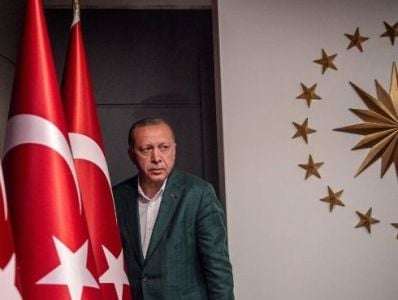
The presidential elections in Turkey, scheduled for mid-June 2023, may be postponed to autumn 2022, the Welt am Sonntag newspaper writes, citing sources in the European External Action Service (EEAS) and among EU diplomats.
According to the publication, there are some signs that Turkish President Recep Tayyip Erdogan is going to hold elections ahead of schedule, and their organization could happen quite quickly.
Among the signs showing Erdogan's preparations for the upcoming elections, diplomats mention a surge in the activities of the Turkish president in international politics - his active mediation between Western countries and Russia in connection with the situation around Ukraine, activation in the Syrian direction and the resumption of the Turkish gas production program in the Mediterranean Sea. On August 9, the ship Abdulhamid Khan sailed from the port of Mersin, which will explore deposits in the eastern Mediterranean. In addition, in mid-August, Erdogan personally visited Ukraine, where he met with President Volodymyr Zelenskyy and UN Secretary General António Guterres.
All these actions are intended to demonstrate the strength of the Turkish leader before the start of the election campaign, the sources of the publication say, and Erdogan may consider a possible rise in public sentiment in Turkey after a short recovery in the Turkish economy following the summer as a reason to hold elections, being in a favorable situation for himself.
Annual inflation in Turkey in July 2022 rose to 79.6 percent, the highest since 1998, while prices rose by 2.37 percent in just a month. These are the results of another round of the currency and economic crisis, in which the country has been for several years.
Analysts cite Erdogan's policy of lowering interest rates to boost economic growth, which began in 2018, as one of its reasons. This was done against the advice of the head of the Central Bank, which caused the lira to fall to a record low and to increase spending in a country dependent on imports of materials and energy.
In the autumn of 2021, inflation in the country began to grow even more - the lira fell sharply after the country's Central Bank lowered the rate to 14 percent. And in 2022, the economic fallout from Russia’s invasion of Ukraine and the continued fall of the lira further spurred price increases. The currency has weakened 44 percent against the dollar in 2021 and has fallen another 27 percent this year.
Since 2018, the president has fired three central bank executives, but despite the continued rise in inflation and the economic consequences of the pandemic, in 2021 he announced his intention to organize a full-fledged space program in the country: create its own spaceport, send its citizen into space, and launch new satellites for civil and military purposes.
The initiative aroused controversy among citizens. While some were enthusiastic about the idea, others questioned the appropriateness of a costly mission to the moon in a time of economic crisis. At the same time, the mission was announced even before the autumn sharp drop in the lira exchange rate, but even after these events, Erdogan did not abandon the space program, writes Deutsche Welle.