make preferable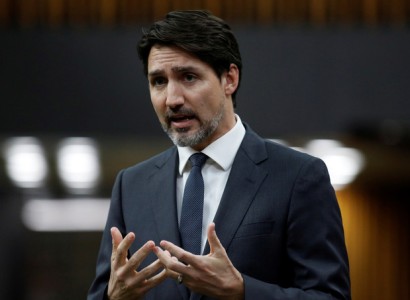
The war in Ukraine has brought Canada and Germany closer together as Canada seeks to increase exports of energy and essential minerals to Germany, Reuters reported.
German Chancellor Olaf Scholz met with Canadian Prime Minister Justin Trudeau as part of a three-day visit with a delegation of German executives. The two countries are expected to announce agreements Tuesday to accelerate hydrogen and critical minerals exports to Germany.
"What Russia's decision to invade Ukraine has done is accelerated and deepened the approach that we have towards each other," Trudeau said.
While Trudeau left the door open for new liquefied natural gas (LNG) export projects to Europe from Canada's Atlantic coast, he stressed the economic difficulties of these projects and the need to decarbonize the global energy supply.
Canadian companies are trying to understand "to see if it makes sense to export LNG and if there's a business case for it to export LNG directly to Europe," Trudeau said.
Scholz noted that while Germany needs to buy gas elsewhere so it doesn't depend on supplies from Russia, the country also wants to achieve zero carbon emissions by 2045.
Canada wants to be completely carbon neutral by 2050. By mid-2024, Germany hopes to eliminate its need for Russian gas.
Canada was the world's fifth-largest producer of natural gas in 2020, according to the International Energy Agency, but it currently has no LNG plants on the East Coast and no way to get gas to them without expanding pipelines.
Trudeau said his government is willing to loosen "regulatory hurdles" to any new LNG projects if companies decide there is a profitable business case to build them.
But last week, Canadian Natural Resources Minister Jonathan Wilkinson downplayed the prospects for new LNG projects, saying in an interview that pure hydrogen production is a "big opportunity" for Canada.