make preferable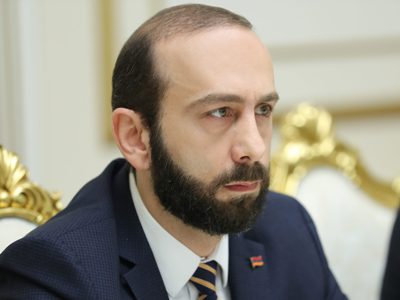
Armenia's position is clear and unequivocal that the units of the Azerbaijani Armed Forces must leave the sovereign territory of Armenia. Prime Minister Nikol Pashinyan stated this at Friday’s Cabinet meeting of the government of Armenia.
"I want to emphasize that it is not only about the events of the last days, but also about the [Azerbaijani] invasion that took place in the Khoznavar area on May 12 last year. This position of Armenia was recorded yesterday during the discussions held at the UN Security Council. Basically, discussions took place at the UN Security Council based on Armenia's petition. Yesterday evening, I had another telephone conversation with President Emmanuel Macron of France, the country presiding over the UN Security Council, and an agreement was reached that the situation shall continue to remain at the focus of the UN Security Council's attention," Pashinyan said.
Presenting the details of this UN Security Council session, Foreign Minister Ararat Mirzoyan noted that this was the second such discussion.
"Two days ago, another discussion took place in a closed mode. The second one, at our insistence, took place in an open mode so that the humanity of the whole world could follow the positions of permanent and non-permanent member countries of the UN Security Council. A document based on the results of the discussion has not been adopted yet. But this shall not downplay the importance of the discussion in any way because, in fact, the international community has taken a very clear position—even without a document—on the issues.
I will list them now. The vast majority of countries emphasized the inadmissibility of the use of force, the inviolability of the territory of Armenia, the need to return to the positions before the invasion, the term ‘aggression’ was used many times. That is, there is a very clear perception that this is an aggression, an invasion of the territory of Armenia, that civil infrastructures have been targeted, that the invader must return to the initial positions. Let me say more. In the discussions, many countries have spoken also about the NK [(Nagorno-Karabakh)] conflict, the problem. Basically, I will not exaggerate that the Azerbaijan leadership theory which they are trying to circulate—that there is no NK problem, there is no NK—received its equivalent opposite reaction from the international community yesterday. This is the positioning of the international community, and we must continue working in this direction," said Mirzoyan.
Also, the Armenian FM expressed his appreciation to the countries that boldly stopped putting a “sign” of equality between the aggressor and the target of aggression.
"But I must also admit that in the case of separate countries and country, we had higher expectations; and perhaps it is not a secret that in some cases they were not quite met. Allow me not to elaborate further," added Mirzoyan.