make preferable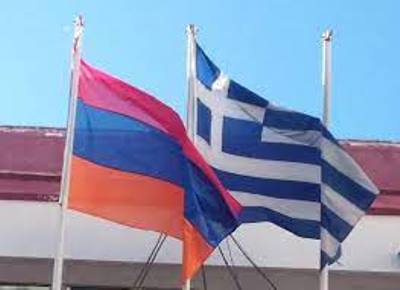
Less than two years after Azerbaijan's war against the Armenians of Artsakh, also known as Nagorno-Karabakh, the Azerbaijani armed forces are waging an illegal war of aggression against the Republic of Armenia, Uzay Bulut writes in an article on the Providence portal.
Turkey will continue to support Azerbaijan and will always do so, Turkish Foreign Minister Mevlut Cavusoglu said the same day.
Azerbaijan's aggression against Armenians has resulted in massive destruction of civilian buildings and settlements, as well as horrific torture and killings of Armenians. Anush Apetyan, a 36-year-old Armenian soldier was captured in the city of Jermuk, then raped, tortured and dismembered by Azerbaijani soldiers. They put her severed fingers in her mouth and gouged out her eyes. Azerbaijani soldiers filmed these barbaric acts and posted the video on social networks. Apetyan had three children, aged 16, 15 and 4.
Armenians in Artsakh were also genocidally attacked by Azerbaijan and Turkey during the 2020 war against Artsakh, which lasted 44 days, from September 27 to November 10. The whole world watched as the aggressors committed many crimes and indiscriminately shelled the lands of Artsakh. Some 90,000 Armenians were forcibly displaced.
Then Turkish and Azerbaijani soldiers took part in a military "victory parade" in the Azerbaijani capital of Baku on December 10, 2020. Turkish President Recep Tayyip Erdogan and Azerbaijani President Ilham Aliyev took part in the parade, which was organized to mark the countries' joint "military victory" over Artsakh.
During the "victory parade," Erdogan delivered a speech praising Enver Pasha, one of the organizers of the genocide in Ottoman Turkey in 1913-1923 against Armenians, Assyrians and Greeks. An Ottoman military march was also played during the event.
Erdogan referred to the 1918 Islamic Army of the Caucasus, created by Enver Pasha and led by Ottoman commander Nuri Pasha. The Islamic Army of the Caucasus was responsible for the massacres of the non-Muslim population of Baku, mostly Armenians. "Today is a day to bless the souls of Nuri Pasha, Enver Pasha and the brave warriors of the Islamic Army of the Caucasus," Erdogan said at the time.
Just as Turkey falsely claims that the Greek islands in the Aegean Sea and Cyprus are Turkish territory, Azerbaijan falsely claims that Artsakh and even Armenia, including its capital Yerevan, are Azerbaijani territory.
In his speech, Aliyev said that the Armenian capital Yerevan, Armenian Lake Sevan and the Syunik (Zangezur) region in southern Armenia are "the historical lands of Azerbaijan."
This was not the first time Aliyev referred not only to Artsakh but also to the Republic of Armenia as "Azerbaijani lands." In 2018, for example, Aliyev referred to the same areas of Armenia as "historical lands of Azerbaijan." "The return of Azerbaijanis to these territories," he added, "is our political and strategic goal, and we need to work step by step to achieve it."
To that end, Azerbaijan is targeting Artsakh and Armenia with Turkey's full support. "We support Azerbaijan until victory," Erdogan said on Oct. 6, 2020. - "I say to my Azerbaijani brothers: may your ghazwa be blessed.
"Ghazwa" in Islam means a battle or raid against non-Muslims in order to expand Muslim territory and/or convert non-Muslims to Islam. Erdogan has openly stated that attacks on Armenian territory constitute jihad. Moreover, Turkey and Azerbaijan were not the only ones attacking Armenians. According to a UN report, Turkey also sent Syrian jihadists to Azerbaijan to attack Artsakh.
Similarly, Turkey recently celebrated the 1922 Smyrna genocide against Greeks and Armenians, which, according to Turkish historiography, was merely a "victory over the Greek invaders." On Sept. 4, Erdogan addressed Greece publicly: "Greeks, look at history. If you go any further, the price will be high. We have only one phrase for Greece: Do not forget Izmir (the city of Smyrna). Your occupation of the islands [in the Aegean] will not stop us; we will do what is necessary when the time comes.Unexpectedly one night we will come to [conquer] you."
On August 30, which is celebrated as "Victory Day" in Turkey, Erdogan said: "We saw that our enemies [the Greeks] destroyed our cities during their withdrawal [from Anatolia in 1922] as proof of their mean character. Just as they do today."
What Erdogan was referring to was Turkey's genocidal attack on the Greeks and Armenians of the city, also known as Smyrna, in 1922.
Turkish aggression against Greeks and Armenians has a long history. Greece and Armenia are trying to preserve what is left after the Turkish aggression, historical significance, including their homelands, their cultural identity and heritage. This history of Turkish violence against indigenous Christians, inspired by Islamic jihad and Turkic expansionism, began in the eleventh century with the invasion of Turkic armies from Central Asia into eastern Anatolia (or the Armenian Plateau), which was then within the borders of the Eastern Roman Empire or Byzantine Empire.
Throughout history, Turkish governments pursued a policy of aggression and persecution against native Christians. These persecutions culminated in the genocide of Greeks, Armenians and Assyrians in Ottoman Turkey in 1913-1923, which the International Association of Genocide Researchers also recognizes as genocide.
Subsequent Turkish governments have honored the perpetrators of the genocide as well as the organizers of the 1955 Istanbul pogrom that targeted the city's Greeks, Armenians, and Jews. Many schools, universities, airports, avenues, streets, neighborhoods, and other places throughout Turkey are named after genocide perpetrators and other government officials who committed crimes against their own minority citizens.
Because the international community's response to Turkey's denial of genocide has been slow and ineffective, denying genocide means continuing genocide. On August 17, the Lemkin Institute for Genocide Prevention issued a "Red Flag" warning about possible genocide by the governments of Azerbaijan and Turkey against the Armenian population.
Turkey's proud denial of these genocides and its ongoing aggression against Greece, Armenia, and Assyrians in Iraq and Syria are interrelated. The same ideology that motivated the Christian genocide of 1913-1923 now motivates Turkey and Azerbaijan's aggression against Armenians, Greeks and other Christians.
In 2016, the Turkish Human Rights Association (IHD) declared: "Genocide denial perpetuates genocide. Denial becomes institutionalized and actually socialized and internalized by generations of perpetrators. Denial continually reproduces hatred of the identity of the victims."
The international community must act immediately to hold Azerbaijan and Turkey accountable. The security of Greece, Armenia, Cyprus, Iraq, Syria and even the Turkish people from their own Turkish government depends on ending the impunity of the illegal actions of the governments of Turkey and Azerbaijan.