make preferable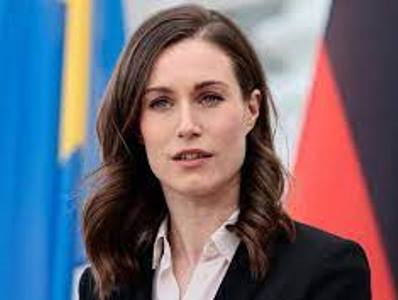
Finnish Prime Minister Sanna Marin does not think that Hungary and Turkey will block the country's application for NATO membership, she told POLITICO, but warned of the risks of postponing accession.
Hungary and Turkey are the only NATO countries that have yet to ratify Finland's accession to the alliance, a process that runs parallel to Sweden's.
Marin hopes that both countries' applications will be approved "as soon as possible." She said she has discussed the issue with Hungarian Prime Minister Viktor Orban and Turkish leader Recep Tayyip Erdogan.
"Our knowledge is that there shouldn’t be any problems when it comes to Finland and our application," she noted. "It’s very important,” she noted, that Helsinki and Stockholm join the alliance together “because we share the same security environment up north.”
Marin stressed the importance of quick accession. "It would be very important that the ratification process go smoothly because, of course, there can be elements when it comes to the security environment," she said, noting that Finland, like Ukraine, is one of Russia's closest neighbors. "There is no military threat to Finland right now, and we have good capabilities when it comes to defending our country," the Finnish prime minister said.
But, she added, "It would be very important that the ratification process would go smoothly, because there might be, of course, elements when it comes to the security environment." According to Marin, it is necessary "to avoid risks, minimize risks — I think that’s important to everyone.”
Finland is in the process of building a fence on part of its border with Russia, and the Finnish leader noted that the project is also an attempt to reduce risk.
The fence can minimize the risk when it comes to "hybrid threats, such as using migrants as a tool to affect another country’s policies or security environment,” she said, also referring to the long-term need for the border with Russia to be "well organized."
"I think we have to be prepared for everything, not only in Finland but in Europe,” she said. "One of the most important issues is technologies,” she said. “We have to learn from this war,” Marin said.