make preferable
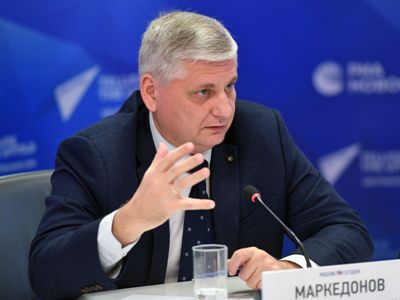
The Sochi summit showed: Russia is too early to write it off, Russian political analyst Sergei Markedonov wrote in his commentary on the Bunin & Co. telegram channel.
"On the last day of October, a trilateral summit on the settlement of the Armenian-Azerbaijani conflict was held in Sochi. Commenting on the results of the complex negotiations, Russian President Vladimir Putin, outlined several fundamentally important theses. However, two of them deserve a special mention. According to the Russian leader, the meeting with Ilham Aliyev and Nikol Pashinyan was "useful", because it created the conditions for further steps towards the settlement of the situation in general. Putin didn't hide the fact that "not everything could be coordinated, some things had to be taken out of the preliminary elaborated at the expert level" of the joint statement of the leaders of Russia, Azerbaijan and Armenia.
How do we assess the results of the Sochi summit? Can we say that Moscow has regained the informal status of the main moderator of Armenian-Azerbaijani settlement. The joint statement of Putin, Aliyev and Pashinyan is the fourth since the end of the second Karabakh war. Each of them has its own "zest". If the first documented the emergence of a new military-political status quo, the second proposed a plan for the economic rehabilitation of the region to transfer the conflict settlement from sacred business to pragmatic, and the third consolidated Moscow's special role in the peace process.
But less than a year passed between the third and fourth documents (published at the end of the Sochi summit on October 31, 2022). However, during this time, much has changed in the Caucasus, and in the post-Soviet space as a whole. The "Minsk Group" has in fact stopped its work, the EU has sharply intensified its mediation (from December of last year to August of this year in Brussels, excluding a meeting in the fields of the European political community in Prague). The Americans did not lag behind their EU partners either. At some point it seemed that Russia was sidelined in the peace process, and Moscow's involvement in the special military operation in Ukraine turned Karabakh into a non-core diplomatic asset. There was an impression that Brussels and Washington had taken the preparation of an Armenian-Azerbaijani peace treaty into their own hands.
However, the Sochi summit showed: It is too early to write Russia off. The Kremlin tried to seize the initiative. And if we estimate the text of the joint statement of October 31, 2022 in the context of understanding of the positions of Moscow, the paragraph about "key contribution of the Russian peacekeeping contingent in provision of security in the zone of its deployment" and "demand for its efforts in stabilization of the situation in the region" is very eloquent. As is the confirmation of the fact that the mediation efforts of the Russian Federation are needed by both sides of the conflict. Baku and Yerevan (at least on the official level) have already achieved unanimity on this issue.
But does this mean that the fact that the initiative has been taken over is undisputed? Certainly not. It is no less eloquent if only because of Nikol Pashinyan's trip to Tehran the very next day after the Sochi talks. Armenia seeks to hedge risks. The meeting of the commission on delimitation of the Armenian-Azerbaijani border in Brussels is not far off. Already today, a mission of observers from the EU and OSCE representatives are working there. Compared with last year, today Russia is acting in a more rigid competitive environment. And here we are talking not only about the West, but also about the East. And the fact that after the Sochi talks the results were the subject of a conversation between Vladimir Putin and his Turkish counterpart Recep Tayyip Erdogan also testifies to the thesis put forward above. Russia is more complicated than yesterday. And tomorrow these difficulties will not disappear. However, Moscow has shown that its potential in the Caucasus must be reckoned with. No matter how complicated the Ukrainian puzzle is, the issues of Armenia and Azerbaijan remain important to Russia.
Makredonov: The Sochi summit showed that it is it's too early to write Russia off