make preferable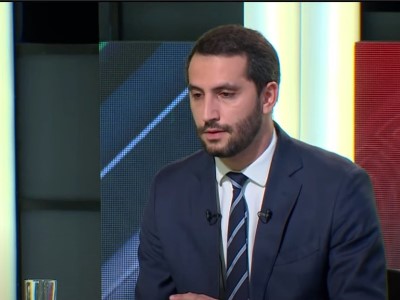
A week ago, in the statement made as a result of the meeting between the President of Russia, the Prime Minister of Armenia and the President of Azerbaijan in Sochi, Russia, the part of the Prague quadrilateral declaration was reaffirmed, according to which Armenia and Azerbaijan recognize each other's territorial integrity on the basis of the Alma-Ata treaty and protocols—which is an important fact. Ruben Rubinyan, the deputy speaker of the National Assembly of Armenia, stated this in an interview with the RFE/RL Armenian Service.
"This is very important for the Armenian side because it also specifies that the delimitation [of the border] between the two countries should take place on this basis," Rubinyan emphasized. "You recall that until now certain destructive statements were being made from Azerbaijan about carrying out delimitation with some historical maps or some unknown maps. And with these two statements—Prague and Sochi—it is specified that there is a border between Armenia and Azerbaijan and it is the border between the [two] former Soviet republics, and the delimitation should take place on that basis."
Also, Rubinyan reminded that the meeting in Sochi was “preceded by discussions, questions in the domestic political field as if Armenia does not agree or does not accept the favorable Russian proposals. But these doubts were completely dispelled when the Republic of Armenia, including the Prime Minister of the republic, openly, directly, and clearly announced that we are in favor of the Russian proposals and we are also in favor of extending the period of deployment of the Russian peacekeeping contingent [in Artsakh (Nagorno-Karabakh)] by 10, 20 or any other years’ period, and the meeting took place in this context."
The deputy speaker of the Armenian parliament added: "The Armenian side, naturally, proposed and insisted that Nagorno-Karabakh be reflected on, or the term ‘Nagorno-Karabakh’ be mentioned, and raised the issue of extending the mandate of the [Russian] peacekeepers, and in general, our well-known positions were raised. But it was not possible to reach an agreement on all issues, which is also expressed in the adopted statement, which is a general statement, and no progress can be seen from that statement."