make preferable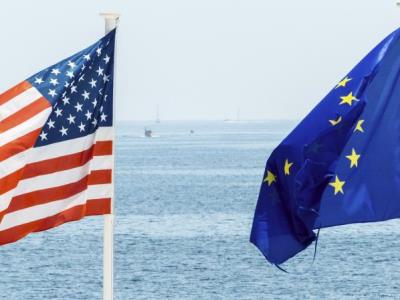
The ghost of a trade war with the U.S. frightens European leaders, but officials on both sides of the Atlantic have recoiled from one nightmarish proposal by Olaf Scholz, Politico reported.
This week, a German government spokesman suggested that the EU resume formal trade talks with Washington in an effort to resolve growing tensions over President Joe Biden's so-called Buy American reforms.
But the proposal has alarmed Brussels and failed to impress Washington. The last attempt at such a deal, the Transatlantic Trade and Investment Partnership, collapsed after three years of agonizing negotiations, amid opposition within Germany and from Donald Trump.
Negotiations between 2013 and 2016 sparked fears that the EU market would be flooded with chlorinated chicken, workers' rights would be undermined, and public health services would be opened to American companies.
Asked to comment on Germany's proposal to restart the stalled negotiations, a European Commission spokesman responded bluntly. “Reviving the TTIP negotiations is not on the agenda,” the spokesperson said.
In Washington, the office of the U.S. trade representative also declined to engage with the German idea. His spokesman said the focus now is on using the Trade and Technology Council “to strengthen and deepen our trade engagement with our transatlantic allies, including Germany.”
The rejection on both sides of the Atlantic would be a blow to Berlin, which had assumed that Brussels would quickly enter into renewed negotiations with Washington. This was a decision that German Finance Minister Christian Lindner had been advocating for months.
Germany's announcement to restart trade talks is ironic because Berlin's lack of political support, especially from the Scholz Social Democratic Party (SPD), was a key factor in derailing TTIP trade talks in 2016.
The idea of resuming politically explosive TTIP negotiations brings back bad memories of massive anti-trade campaigns across Europe. While Lindner and others in Berlin may emphasize that new trade negotiations can be conducted differently, they still risk opening a Pandora's box.
It was because of these fears that Brussels and Washington chose a different, more flexible format-the Trade and Technology Council-when trying to rebuild transatlantic economic relations after the tumultuous years of the Trump administration.
“A transatlantic free-trade area is a fantastic idea from a geopolitical point of view, and perhaps also from an economic point of view,” said Fredrik Erixon from the European Centre for International Political Economy (ECIPE) think tank. “But of course, it’s totally unrealistic.”
The question of how to fight back against Washington pouring subsidies into the homegrown electric-car industry has been weighing heavily on the minds of European ministers and officials this week. They fear the move could hurt European business at a time when the war in Ukraine is already putting the EU economy at risk.
The European Commission is pushing hard for Washington to find a diplomatic solution. But the U.S. tax cuts, which are part of a huge tax, climate and health care package known as the Inflation Reduction Act, have already been passed by Congress in August. Creating new exemptions for Europeans is politically difficult for the Biden administration.
If the diplomatic route proves to be a dead end, Brussels will be forced to consider its next steps.
In theory, Brussels could sue Washington at the World Trade Organization. But complaining against an ally at the WTO is bad PR at a time when both sides want to present a united front against Russia.
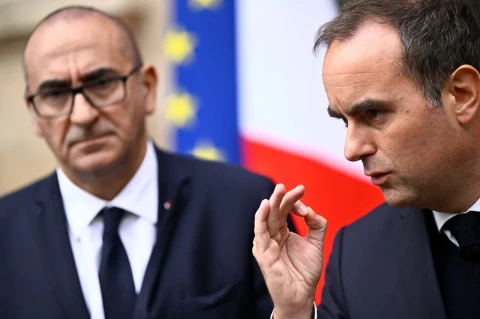
Paris, which is playing its usual role as Europe's troublemaker on the transatlantic trade front, wants to fight back hard. French Finance Minister Bruno Le Maire insisted on strongly condemning the U.S., not ruling out a complaint to the WTO or a counter-subsidy to help European industry.
For some, Germany's proposal for a new transatlantic trade pact should be interpreted as a negotiating position designed as a counterweight to the French tough approach. "By suggesting the exact opposite of protectionism, Berlin will navigate the EU towards a compromise in the middle," one EU diplomat said. "They are very well aware that this will lead nowhere."
Erixon, from the ECIPE also said he doesn't expect anyone in the German government to consider formal trade talks a realistic path, adding, "It's more street theater."
EU’s trade chief Valdis Dombrovskis, who has managed to settle many transatlantic trade disagreements since Trump, remains optimistic. He hopes the talks can lead to some progress ahead of the next trade and technical council meeting in Washington in early December.