make preferable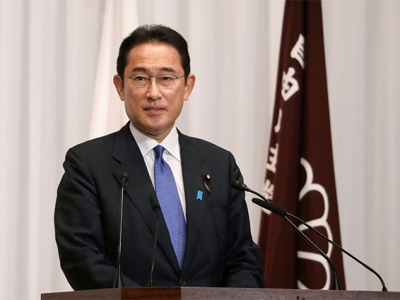
Japanese Prime Minister Fumio Kishida on Wednesday promised to deepen his country's alliance with the United States as part of Japan's new defense policy, AP reported.
Speaking at a news conference after visiting the Ise Shrine in central Japan, Kishida said he would visit Washington for talks with U.S. President Joe Biden to emphasize the strength of the Japan-U.S. alliance and emphasize closer cooperation between the countries as part of Japan's new security and defense strategy adopted last month.
The U.S. visit is part of Kishida's upcoming trip to most of the Group of Seven countries, which begins Monday. Japan will host this year's G-7 summit in Hiroshima. Kishida said his meeting with Biden will be very important and more meaningful than showing my face as G-7 president.
Under the new security and defense plans, Japan is buying hundreds of U.S.-developed Tomahawks and other long-range cruise missiles to pre-empt potential attacks, and is strengthening defenses in southwestern Japan amid growing concern over the Taiwan emergency. Japanese media reported that the U.S. and Japan are expected to discuss how they would cooperate in the event of conflict over Taiwan.
Earlier Wednesday, the White House announced that Biden would receive Kishida for economic and security consultations on Jan. 13.
Biden and Kishida are expected to discuss North Korea's nuclear and ballistic missile program, amid concerns about the possibility of another nuclear test by the reclusive country, as well as Russia's invasion of Ukraine, stability in the Taiwan Strait, climate change and economic issues, said White House press secretary Karin Jean-Pierre.
The two leaders last met in Bali, Indonesia, during the November G-20 summit.
Kishida will also visit France, Italy, Britain and Canada to meet with their leaders during his Jan. 9-15 trip, according to the Japanese Foreign Ministry.
He also pledged Wednesday to address Japan's serious fertility decline while promoting his "new capitalism" policy, which he said would create a virtuous cycle of growth and wealth distribution to achieve steady wage growth that has stagnated for decades.
The number of children born in Japan last year is expected to fall to a new record below 800,000, part of a sustained recession seen as undermining national strength.
Japan's prime minister has said the government will do more to expand support for child care and close the gender gap in wages and working conditions to lower barriers for women.
Japan is the third largest economy in the world, but the cost of living is high and wage growth has been slow. The conservative government is lagging behind in making society more inclusive of children, women, and minorities.
So far, government efforts to encourage people to have more children have had limited effect, despite the introduction of pregnancy, childbirth, and child-care subsidies.