make preferable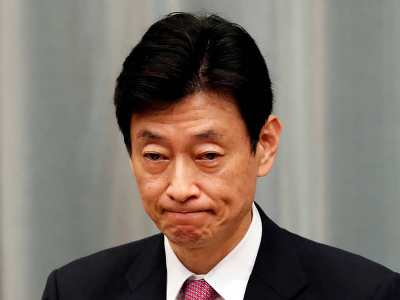
Japan wants the G-7 Group to adopt a coordinated approach this year aimed at preventing the economic coercion that China applies to some of its trading partners, Bloomberg reported.
Actions taken by China in recent years, such as suspending imports of Taiwanese pineapples and Australian wine, pose a clear and present danger to economies around the world, Japanese Economy and Trade Minister Yasutoshi Nishimura said in Washington.
Japan will lead the G7 and host the group's summit this year. Nishimura said that countermeasures may be needed to help countries and regions targeted by mercantilist actions by authoritarian regimes. He said it would also be useful to identify bottlenecks that could be exploited by such regimes
Beijing, for its part, criticized G7 members for what it said were their own protectionist actions aimed at preventing China's economic rise. China's Foreign Ministry warned that the Biden administration's export controls on semiconductors were hurting the global economy and U.S. business. Late last year, China also criticized Britain for abusing government power in cancelling a deal with a chip factory.
Nevertheless, Nishimura said he intended to push such a policy in comments after meeting with Commerce Secretary Gina Raimondo.
If Japan complies with the plan to restrict local chipmakers, including Tokyo Electron Ltd. and Nikon Corp. from selling their advanced products to Chinese customers, it would be a major victory for the Biden administration in its increasingly aggressive campaign to prevent China from acquiring key foreign technologies.
Japan's economy minister said that more than two decades ago, the democracies made the mistake of believing that deepening economic interdependence through the accession of China and then Russia to the World Trade Organization would "surely lead to world peace" after the end of the Cold War.
But prosperity did not help build peace, but only increased geopolitical risks, Nishimura said. Authoritarian governments used economic growth and technological advances to increase their power.
The Japanese minister called for greater coordination among free-market countries on measures including export controls, improving supply chain resilience and energy security.
He also said that given that the WTO dispute settlement mechanism is now effectively paralyzed - after the Trump administration paralyzed the appellate body in 2019 - Japan, the U.S., Europe and other like-minded partners need to work hard on WTO reform. That will be one of the biggest issues we need to work on this year, he said.