make preferable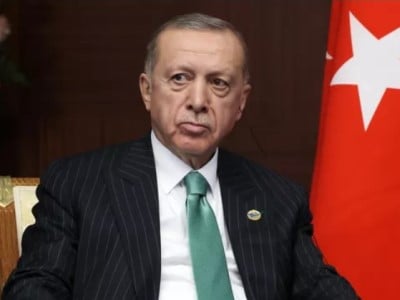
Turkey's most devastating earthquake since 1939 has raised big questions about whether such a large-scale tragedy could have been avoided and whether President Erdogan's government could have done more to save lives, BBC News reported.
With elections on the horizon, his future is on the line after 20 years in power and his pleas for national unity have gone unheeded.
Recep Tayyip Erdogan has admitted shortcomings in the response, but he appeared to blame fate on a visit to one disaster zone: "Such things have always happened. It's part of destiny's plan."
Turkey lies on two fault lines and has earthquake building codes dating back more than 80 years. But last Monday's double earthquake was far more intense than anything seen since 1939. The first quake registered magnitude 7.8 at 04:17, followed by another of 7.5 dozens of miles away.
It required a massive rescue operation spread across 10 of Turkey's 81 provinces.
But it took time for the response to build and some villages could not be reached for days. More than 30,000 people from the professional and voluntary sector eventually arrived, along with teams from many other countries.
More than 6,000 buildings collapsed and workers from Turkey's AFAD disaster authority were themselves caught up in the earthquakes.
Turkey has more experience of earthquakes than almost any other country, but the founder of the main volunteer rescue group believes this time, politics got in the way.
After the last major earthquake in August 1999, it was the armed forces who led the operation, but the Erdogan government has sought to curb their power in Turkish society.
Instead, Turkey's civil disaster authority now has the role, with a staff of 10-15,000, helped by non-government groups such as AKUT, which has 3,000 volunteers.
President Erdogan has accepted that search efforts were not as fast as the government wanted, despite Turkey having the "largest search and rescue team in the world right now".
For years, Turks have been warned of the potential of a big earthquake but few expected it to be along the East Anatolian fault, which stretches across south-eastern Turkey, because most of the larger tremors have hit the fault in the north.
When a quake in January 2020 hit Elazig, northeast of Monday's disaster zone, geological engineer Prof. Naci Gorur of Istanbul Technical University realized the risk. He even predicted a later quake north of Adiyaman and the city of Kahramanmaras.
"I warned the local governments, governors, and the central government. I said: 'Please take action to make your cities ready for an earthquake.' As we cannot stop them, we have to diminish the damage created by them."
One of Turkey's foremost earthquake engineering specialists, Prof. Mustafa Erdik, believes the dramatic loss of life was down to building codes not being followed, and he blames ignorance and ineptitude in the building industry.
Under Turkish regulations updated in 2018, high-quality concrete has to be reinforced with ribbed, steel bars. Vertical columns and horizontal beams have to be able to absorb the impact of tremors.
Had all the regulations been followed, the columns would have survived intact and the damage would have been confined to the beams, Prof. Erdik believes. Instead the columns gave way and the floors collapsed on top of each other, causing heavy casualties.
The justice minister has said anyone found to have been negligent or at fault will be brought to justice.
Critics, such as opposition CHP party leader Kemal Kilicdaroglu, argue after 20 years in power President Erdogan's government has not "prepared the country for the earthquakes".
One big question is what happened to the large sums collected through two "earthquake solidarity taxes" created after the 1999 quake. The funds were meant to make buildings resistant to earthquakes.
One of the taxes, paid to this day by mobile phone operators and radio and TV, has brought some 88bn lira (£3.8bn; $4.6bn) into state coffers. It was even hiked to 10% two years ago. But the government has never fully explained where the money has been spent.