make preferable
Starting from September 1, Russian medical institutions will be allowed to repair equipment with non-original spare parts and components, Kommersant newspaper reported on Monday, February 13, referring to the draft order of Roszdravnadzor. As the newspaper notes, the agency fears the introduction of Western sanctions against the Russian healthcare industry, one of the last still unaffected by the restrictions amid Russia's war against Ukraine.
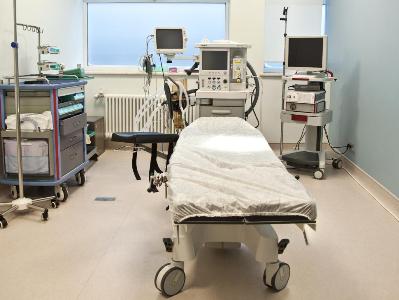
At the same time, most of the high-tech medical equipment in Russian hospitals and clinics is manufactured abroad and must be regularly exported for repairs abroad. For example, X-ray tubes for computer tomographs must be replaced every year and a half, but their main manufacturers are companies from the Netherlands, Germany, the United States and Japan, and cooperation with them may not be possible if new sanctions are imposed, the newspaper points out.
As Kommersant notes, so far Russian state clinics have had no problems with exporting medical equipment for repair abroad. At the same time, according to one of the newspaper sources, in summer 2022 one of the Swiss manufacturers of ventilators refused to service ventilators already delivered to Russia in one of the major Moscow clinics.
In the spring of 2022, the Russian government banned the export of a number of goods, including medical equipment, from the country. Then the Ministry of Health said that companies can get a temporary permission to take medical equipment out of the country for repairs. At the same time the return of medical equipment to Russia can also be complicated, for example, if the repair requires components of the category of dual-use goods, such as chips.
In order to avoid the risks of non-return, the Federal Service for Supervision in the Sphere of Health Care and Social Development suggested allowing the use of components not provided by the manufacturer for repair and maintenance of medical equipment in Russia. According to experts, a significant portion of medical equipment in Russia is still serviced by non-certified service centers, but they can only provide standard parts. High-tech medical equipment often consists of unique elements, the technology for the creation of which only the manufacturer knows, and it will take several years to recreate it.
In addition, the development of their own components or models of medical equipment will be more expensive than buying them abroad, according to Kommersant. According to the analytical company MEDITEX, the share of domestic producers in the Russian market is now no more than 30 percent. Most medical equipment, according to IMEDA, especially CT scanners, MRIs and ultrasound machines, is manufactured in Europe, Asia and the United States.