make preferable
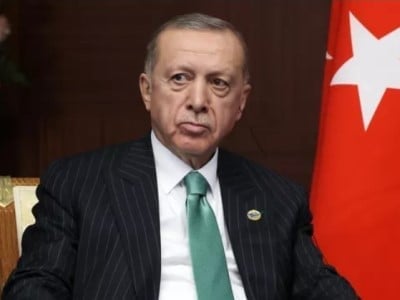
Turkish President Recep Tayyip Erdogan's need for "calm waters" in the Aegean Sea is becoming a forced option as the situation inside Turkey following the earthquakes in the south has turned his political survival into a difficult gamble, the Greek publication Kathimerini writes.
"Aside from the immediate devastation in terms of death toll and collapsing GDP, a wave of discontent against the government appears to be sweeping Turkey, which the ruling party appears powerless to manage. This requirement for home concentration de facto obliges Erdogan to tone down on all fronts toward the outside world," Vassilis Nedos notes.
Such an attitude was clearly visible during the meeting between Foreign Minister Nikos Dendias and his Turkish counterpart Mevlüt Çavuşoğlu at the ruins of the ruined Antakya. The radical change in style and content of Cavusoglu's speech was justified by the circumstances, but any experienced observer would have realized that for Ankara at the moment all its priorities are narrowly centered within Turkey's borders, the publication stresses.
As for the elections in Turkey, “no one is in a position to know anything at the moment,” said a knowledgeable Greek media source.
In addition to Greece sending humanitarian aid, the tragedy has activated a number of channels that until now have been limited to the essentials. In the aftermath of the earthquakes, these channels have been opened at many different levels (presidential, prime ministerial, diplomatic, civil protection) and seem likely to remain so for the foreseeable future.
In Athens, meanwhile, there is diplomatic restraint, since Turkey is currently a deeply wounded country that may find itself in transition to an entirely different era in the coming months.
Greek-Turkish contacts will continue in Brussels with a brief one-on-one meeting between the respective defense ministers, Nikos Panagiotopoulos and Hulusi Akar, either on the sidelines of an extraordinary Contact Group meeting on Ukraine on Tuesday or on the sidelines of a NATO defense ministers meeting on Wednesday.
In an interview with Star TV on Monday, Dendias described the scope of the unfolding humanitarian crisis.
“It is an area where temperatures are below zero at night. They need huge help, winter tents as quickly as possible. The estimate is that 65,000 tents are needed. They need containers and capacity to house the most vulnerable part of the population. There are no more hospital beds in the area,” he said.
Location