make preferable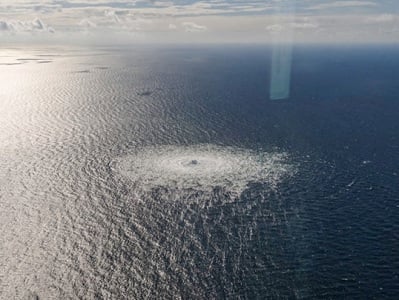
Researchers from Denmark, Germany, and Poland conducted research and found out how the explosions at the Nord Stream and Nord Stream 2 natural gas pipelines affected the ecology of the Baltic Sea, writes The Copenhagen Post.
They have found that four thunderous explosions at the Nord Stream in September 2022 lifted 250,000 tons of pollution from the seabed, as a result of which sediment containing toxic substances that could destroy several marine populations rose to the surface.
According to these researchers, the Baltic cod and porpoise populations could have died as a result of the incident. It is noted that the breeding places of these animals were located near the explosion zones.
“This could mean that fish that have been exposed to substances [such as lead and TBT] will become ill. There are some of them who will die, and there are some of them who will have difficulty reproducing," explained Hans Sanderson from the Department of Environmental Science at Aarhus University.
In response to the report, Danish environment minister Magnus Heunicke promised the government would “continuously monitor and share the information with our neighbouring countries around the Baltic Sea, so that we have an overall picture of the consequences and can follow up to the relevant extent.”
In addition, Bo Oksnebjerg, the general-secretary of the World Wide Fund for Nature, has urged the Danish and Swedish governments to come up with a “sea plan” to ensure the Baltic is safeguarded against future incidents of this magnitude.
“It is yet another death peg on the coffin of the Baltic Sea,” Oksnebjerg said.