make preferable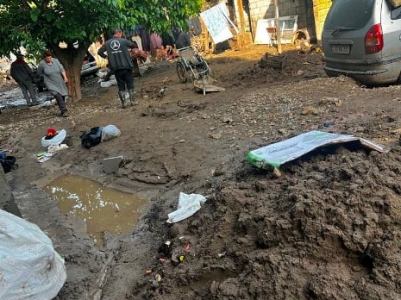
There are national, provincial, and community commissions that work and assess damages in various directions. Gnel Sanosyan, Minister of Territorial Administration and Infrastructure of Armenia, told this to reporters in the National Assembly Wednesday, referring to the ongoing relief efforts in the flood-ravaged Tavush and Lori Provinces.
"You know that the damage is quite multi-layered, starting from large state infrastructures, such as interstate, local roads, railways, as well as communal and individual businesses, gardens, lands, houses, etc. But it is still not possible to generalize the amount of damages. Now we have high-rise buildings, the first floors of which were filled with water and sludge. It will still take a lot of time to determine to what degree the building was damaged, whether it was damaged or not, what level of dilapidation it has, whether it is livable or not. Unfortunately, there will be quite large numbers of damage, taking into account the spatial and sectoral coverage," said Sanosyan.
According to the minister, Alaverdi city, with its districts, and Karkop village suffered the most from these floods. The whole village was filled with sludge, and now there is active work there.
“Regarding the epidemic situation, the concern is that there is a large amount of sludge that may contain harmful substances. On the other hand, there are dead animals—chickens, pigs—some of whose bodies have been found, some of which have not. For this reason, our colleagues in the healthcare sector are conducting search operations on the one hand, and on the other hand, they are urging caution. Cemeteries have been set aside for livestock so that diseases do not spread," Sanosyan said.