make preferable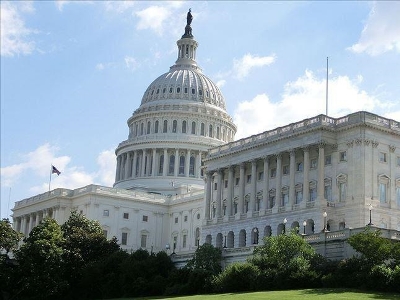
Is there a chance for peace and stability amid the tragic past between Armenia and Azerbaijan? And what can the United States do to assist it? Last night, American lawmakers discussed this matter for more than an hour at the hearing of the US Commission on Security and Cooperation in Europe, also known as the Helsinki Commission, reports the RFE/RL Armenian service.
This prestigious organization was created more than 45 years ago by the American government to monitor cooperation and security in Europe.
Both Democratic Party and Republican Party legislators participating in the hearing agreed that Armenia cannot overcome the current challenges alone.
Azerbaijan shows no sign of withdrawing from the occupied territories of Armenia and posits new demands to delay the signing of the peace treaty, announced the chairman of the US Senate Foreign Relations Committee, Senator Ben Cardin, who visited Armenia several months ago.
The seasoned congressman emphasized that, in his conviction, the peace treaty being negotiated between Armenia and Azerbaijan for almost two years is not fair, as it does not address a number of key issues for the Armenian side.
Armenia's wish alone, however, is not enough, stated the congress members and analysts familiar with the region in attendance to the hearing, and stressed that the United States, together with its European allies, should encourage Azerbaijan and Turkey to meet the concessions of the Armenian side. Joe Wilson, the Republican Party Co-Chair of the Helsinki Commission, noted that a few days ago he personally met with the president of Azerbaijan, to whom he conveyed this message also.
Several congress members—mainly from the Republican Party camp—attending the hearing emphasized that Azerbaijan—and especially Turkey—remain a reliable ally of the United States in the region. But after several such remarks, Democrat Steve Cohen, Co-Chair of the Congressional Caucus on U.S.-Turkiye Relations and Turkish Americans, warned that today's Turkey is not the country with which the United States has cooperated for decades.
At the hearing, everyone agreed that Washington should provide political, economic, and diplomatic support to Armenia.
And a few hours after the hearing, the United States government announced that it was doubling its financial assistance to Armenia from $120 million to $250 million. The goal of this assistance, according to the United States Agency for International Development (USAID), is the development of democracy and economy in Armenia.