make preferable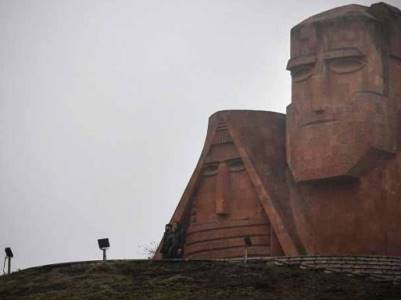
Organizations providing support to Armenian refugees and displaced people from Artsakh (Nagorno-Karabakh) have issued a joint letter addressed to António Guterres, Secretary-General of the United Nations; and Audrey Azoulay, Director-General of UNESCO.
The letter reads as follows:
The undersigned non-governmental organizations, representing the people displaced by the 2020 war against the people of Artsakh (Nagorno-Karabakh) and the consequent forced deportation in 2023, write to you to identify the deliberate and targeted destruction and expropriation of Armenian cultural heritage in the occupied territories of Artsakh.
There are grave examples of cultural genocide carried out by the Azerbaijani authorities in the occupied regions of Artsakh, both during the 2020 44-day war and after it.
Numerous cases of crimes against the Armenian heritage have been recorded: Holy Mother of God Church of Mekhakavan (Jabrayil), Saint Sarkis Church of Mokhrenes (Susanlıq), Church of Holy Resurrection of Berdzor (Lachin), and Church of John the Baptist of Shushi (Shusha) have been completely destroyed. Armenian spiritual centers were and are being desecrated along with hundreds of khachkars (cross-stones) being destroyed. Over 30 art and museum collections, comprising thousands of exhibits, were looted by Azerbaijan.
Crimes against cultural heritage are considered to be affiliated with genocide according to the Rome Statute's Guidelines for the Examination of Crimes Against Cultural Heritage, which states: "Crimes against or affecting cultural heritage are often linked to genocide or committed as part of it."
Numerous memorial complexes built in memory of the victims of the Armenian Genocide, World War II, and the Artsakh wars, as well as memorial stones honoring various individuals, bridges of historical significance, cultural centers, libraries, schools, and other places, have been destroyed. The villages of Karin Tak (Dashalty) in the Shushi region and Mokhrenes in the Hadrut region, as well as the historic district of Hadrut city, have been completely demolished.
Recently, entire districts of Stepanakert (Khankendi), including the 19th-century historic district, have been razed to the ground. The deliberate destruction of the city, its historical buildings, and heritage violates Article 8 of the Rome Statute and is considered a grave crime against humanity.
The acts of destruction of cultural property are prohibited under the four 1949 Geneva Conventions on the protection of war victims, the laws and customs of war, their protocols, as well as relevant UN resolutions and human rights protection treaties.
The acts of destruction of cultural property are prohibited under the four 1949 Geneva Conventions on the protection of war victims, the laws and customs of war, their protocols, as well as relevant UN resolutions and human rights protection treaties.
The widespread dissemination of videos depicting these destructions by Azerbaijanis has become a means of psychological pressure on the Armenians of Artsakh.
Cemeteries in the villages of Mets Tagher in Hadrut region, Sghnakh in Askeran region, Haterk (Hasanriz) in Martakert region, and the city of Shushi have been destroyed by Azerbaijanis. The destruction of cemeteries is a crime against personal dignity and human memory.
According to Article 4 of the 1954 Hague Convention for the Protection of Cultural Property in the Event of Armed Conflict, any act of vandalism, appropriation, looting, hatred, or reprisal against cultural heritage is prohibited.
According to the first Hague Protocol of 1954, it is forbidden to destroy cultural or spiritual values in the occupied territories. The policy of deliberate destruction of cultural heritage is condemned by UNESCO's 2003 Declaration on the Deliberate Destruction of Cultural Heritage.
However, during 2020-2024, UNESCO has not fulfilled the mandate entrusted to it by the United Nations to protect global cultural heritage and has not sent a mission to Artsakh to document the current state of the region's heritage and thereby prevent further destruction by Azerbaijan. Instead, it has limited itself to issuing statements and expressing concerns.
We, the undersigned, are residents displaced from the occupied territories of the Republic of Artsakh, therefore request the UN to make every possible effort to ensure that UNESCO, in accordance with its mandate from the United Nations to protect cultural heritage, sends a mission to Artsakh to document the cultural crimes committed against humanity and implement mechanisms to prevent further violations.
Sincerely,
- “Return to Karvachar” NGO
- “Return to Dizak” NGO
- “For the sake of Hadrut” NGO
- “Return to Kashatagh” NGO
- “Deoccupation of Shushi” NGO
- "Harmony" Shushi Women’s NGO
- "Dizak Art"Cultural NGO
- “Krunk” NGO for the protection of the rights of Artsakh Armenians
- “Union of Arts workers of Artsakh” NGO
- “MediaStep” NGO
- Artsakh historical and cultural heritage protection service
- Center for Support of mothers of Artsakh
- Power of Thought" Scientific Public Organization
- "Askeran Development Center" Public Organization
- "In the Name of Hadrut" Public Organization
- "Dizak Art" Cultural Public Organization
- "Harmony" Shushi women's non-governmental organisation
- "Root and Branches" Public Organization
- "Motherhood" Public Organization
- "Young Lawyers" Public Organization
- "Independent Center for Strategic Research" Public Organization
- "Development" Public Organization
- "Union of Afghan War Veterans" Public Organization
- "Refugee Women's Association""
- "Union of Journalists of Artsakh" Public Organization
- "Union of Artists of Artsakh"
- "Center for Youth Public Research" Public Organization
- "Artsakh Cultural Heritage Protection Council" Public Organization
- "Unified Armenia" Patriotic Public Organization
- "Union of Wounded Freedom Fighters" Social-Legal NGO
- "Krunk" NGO For the Protection of the Rights of Artsakh Armenians
- "Center for Support of Mothers of Artsakh”
- "Artsakh Historical and Cultural Heritage Protection Service"
- "Our Home Artsakh" NGO
- Union of Violently Displaced Artsakh Armenians
- "Eagles of Artsakh" Public Organization
- "My Right" Civil Movement
- ‘’From Artsakh to Artsakh’’ informational, analytical, investigative, human rights center
- ‘’Vita’’ NGO
- "GEN" initiative center NGO
- "Artsakh people displaced from Artsakh" NGO
- “MediaStep” NGO
- Press Club of Stepanakert NGO
- "Reborn Motherland" NGO
- "Council of Elders" NGO
- "Artsakh Youth Development Center" NGO
- "Union of Relatives of Servicemen Killed and Missing in Action in the Third Artsakh War"
- "Artsakh Awakening Movement"
- "Kachar" Scientific Center NGO
- "Forward Artsakh"
- "Educational and Psychological Support" NGO
- "Art and Women" NGO
- "Tekeyan Cultural Union of Artsakh"
- "Return to Kashatagh" Public Organization
- "Artsakh Culture and Tourism Development Agency" NGO
- "Bridge of Dialogue Research" NGO
- "Union of Reserve Officers of Artsakh" NGO
- "Union of Refugees of the NKR"
- "Motherhood" Public Organization
- Public Council for protection of cultural heritage NGO
- Youth Public Research Center NGO
- "Armada" Donation Center NGO