make preferable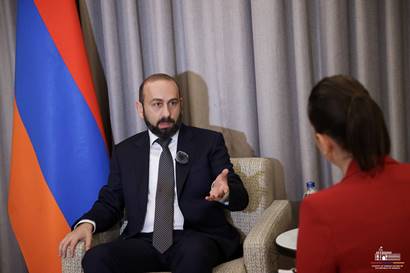
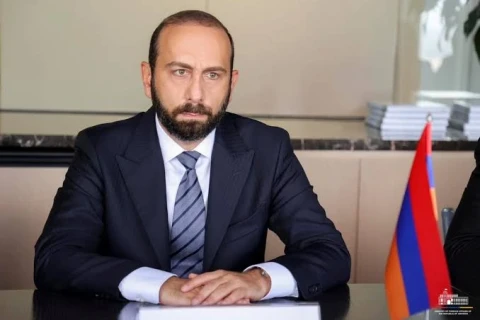
During his participation in the Antalya Diplomacy Forum in Turkey, the Minister of Foreign Affairs of Armenia, Ararat Mirzoyan, gave an interview to Turkish NTV television.
Question: I'm going to talk about the peace agreement that the two sides have agreed. But I would like to start with the session (panel discussion) that you already had with the Azerbaijani Foreign Minister.
We understand that both sides tried to put their positions on that. But how do you evaluate that session? Was it a little bit tense, or you put your positions, what was it?
Ararat Mirzoyan: Well, I would say that it was a constructive discussion. You know, we have had many opportunities with my [Azerbaijani] counterpart, Mr. [Jeyhun] Bayramov, to exchange thoughts behind closed doors, during negotiations, but also in open public deliberations. So, this was another opportunity to exchange thoughts.
Obviously, there are differences in perceptions, and most probably, we will now elaborate a little bit more on that as well. But also, it's an opportunity to make an attempt to bring the positions closer. So, the discussions are always a good idea.
Question: Okay. That's the best way to take it. I would like to talk about that peace agreement. The two sides agreed on the paper. But right now, everybody wonders when it's going to be signed. What is your best call when you're looking at the two sides' positions?
Ararat Mirzoyan: Well, indeed. Let's, first of all, evaluate what has happened. It's an unprecedented thing, a historic thing. Armenia and Azerbaijan agreed over the text of a draft agreement between Armenia and Azerbaijan. A text in which Armenia and Azerbaijan mutually recognized each other's territorial integrity. Within borders which existed between them as Soviet Socialist Republics at the moment of dissolution of the Soviet Union.
They agreed not to intervene in each other's internal affairs and several other very important things. They also, in this document, if ratified and entered into force, they also established a bilateral commission which will oversee the implementation of the agreement and also will handle and manage the misinterpretations that may arise, any concrete situations that may arise on the ground. So, this is indeed a historic event. Now, we think that we can immediately start consultations to define the venue and the time, the concrete date of signing of this agreement.
Question: Would it be in a third country? What are your options on that?
Ararat Mirzoyan: It could be the border between Armenia and Azerbaijan, it could be any other third country which could be acceptable for the two countries, for Yerevan and Baku. So, we can discuss it. But we also know that immediately after the announcement of the fact of agreeing over the text, the Azerbaijani side came up with several preconditions regarding the Minsk group, regarding the Constitution. There are several other ideas in the air, as I understand the situation.
Question: That's what Mr. Bayramov said during the session as well.
Ararat Mirzoyan: Yes. So, our approach is that we can start the process by putting a brick and then another brick and then another brick. And sometime later, we can see that we have together built a very solid bridge, for instance. Or we can sit and wait for a couple of hundred of years to see whether these approaches are irreversible or not, whether the conflict is over in reality or not, whether there are other obstacles. So, our suggestion is to focus on the constructive side of the issue, to focus on the opportunity, to focus on the future, rather than continue digging in the past and seeing only obstacles.
But I can also comment on the concrete ideas of the Azerbaijani side. On the Minsk group our approach is very well known: if there is no conflict and there is an institutional proof of it, a signed peace agreement, there is no need for Minsk group and Minsk structures as well. So, we just proposed to the Azerbaijani side to sign the two documents on the same day – the Peace treaty and the joint application to OSCE or to member states saying that we initiate this process of dissolution of the Minsk group.