make preferable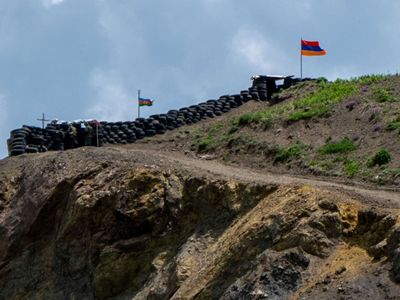
Nightfall is an anxious time for residents of Khnatsakh. Every evening at around 10 p.m., automatic gunfire echoes through the tiny village in Armenia, locals say – the sound of Azerbaijani troops firing into the night sky from their positions across the border, high above, Reuters reports.
The bullets regularly hit houses, though no-one has been hurt, so far, the villagers say. Azerbaijan denies its troops have been shooting across the border, and has accused Armenian troops of violating the ceasefire.
Rising tensions along the border are increasing the risk of new clashes between Armenia and Azerbaijan as they approach a critical juncture in a tortuous peace process, two experts told Reuters.
In March, the two sides said they had agreed the outline of a peace treaty that could be signed in 2026, raising hopes of reconciliation. The draft envisions the two sides demarcating their shared border, and requires Armenia to amend its constitution before Azerbaijan ratifies the deal.
The heavily militarized, 1,000-km border has been closed since the early 1990s.
The countries have fought two major wars in the past 40 years, destabilising the Caucasus - a region that carries major oil and gas pipelines toward Europe, and is strategically important to Russia, Iran and Turkey.
U.S. Secretary of State Marco Rubio told a congressional hearing last month there was a "real risk" of war between the two. He said that the U.S. wanted Azerbaijan "to agree to a peace agreement that does not cause them to invade a neighboring country, Armenia."
Laurence Broers, an expert on Armenia and Azerbaijan at London's Chatham House think tank, said that though a return to full-scale war was possible, more localised skirmishes were more likely.
He said Azerbaijan, whose population of 10 million is three times Armenia's, has few incentives to agree swiftly to a peace treaty and may instead rely on smaller scale escalations to force its neighbour to make further concessions in the talks.
“Escalation and militarization has been a very successful strategy for Ilham Aliyev,” he said.
Armenian authorities have repeatedly insisted there will be no war. In a speech last month, Prime Minister Nikol Pashinyan said that the two countries would not resume fighting, “despite all the arguments, all the provocations”.
Armenia's southernmost province of Syunik is at the heart of the dispute and is where most ceasefire violations are reported.
Syunik separates the main body of Azerbaijan to the east from the Azerbaijani exclave of Nakhchivan to the west. It also provides a vital trade route for Armenia to Iran, which it borders to the south.
Azerbaijan has since 2020 demanded Armenia provide it with a corridor through Syunik to Nakhchivan. Baku has said that the passage would remain Armenian territory but have minimal controls from the capital Yerevan.
Some Azerbaijani officials have also suggested that southern Armenia is historically Azerbaijani territory, though they have not pressed a formal territorial claim.
In addition to its border with Azerbaijan, Armenia’s frontier with Turkey – a close ally of Baku’s – is also closed, making its boundary with Iran a lifeline for trade. A corridor through Syunik could risk shutting off its access to the remote, mountainous border.
Armenia and Iran have warm ties, despite Armenia’s Christian religion, and increasingly pro-Western orientation. In 2022, Iran was Armenia’s fourth-largest source of imports. In May, Tehran’s defence minister visited Yerevan, with Iranian media quoting him as expressing Iran’s opposition to redrawing borders in the region.
The dilemma is heightened by Armenia’s strained ties with traditional ally Russia, which opposes Armenia’s bid to draw closer to the West, and which has deepened its links with Azerbaijan.