make preferable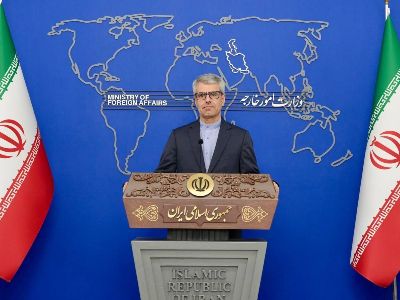
The Caucasus region, particularly the South Caucasus, is of great geopolitical, political, economic, and neighboring importance for the Islamic Republic of Iran. Therefore, it is natural that we participate in processes that can shape or influence the events in the region in one way or another. This was stated at a press briefing Monday by Iranian foreign ministry spokesperson Esmail Baghaei, as he commented on Iran's possible role in the peace process announced by Armenia and Azerbaijan, IRNA reports.
Baghaei noted that Iran maintains close ties with both Armenia and Azerbaijan.
"It is in this context that the visit of the deputy foreign minister [Vahan Kostanyan] of Armenia, who may arrive in Tehran tomorrow, is taking place. Today, the prime minister of Armenia is also expected to hold talks with the [Iranian] president to provide explanations on these events. The Armenian foreign minister stressed that Armenia will refrain from any action that may be incompatible or cause concern for the Islamic Republic of Iran,” he added.
Baghaei noted: “Our ties with Armenia are long-standing and strong, given that the main issue is the Armenian transit route which shall pass through the territory of Armenia. We have a shared but short border with Armenia, about 40 kilometers, which is part of the approximately 6,000 kilometers of land borders with our neighboring countries. However, this border is one of the safest for us; it is a border of friendship. Therefore, we [i.e. Iran] will definitely carefully and openly express our positions and views on all these changes.
Despite our constant support for the unblocking and expansion of transport and communication routes between the countries of the region, which serve as a tool for improving the economic situation for the development and well-being of the peoples of the region, we have always stated that any action in this regard should not contradict international law, should not violate international borders, national sovereignty of countries, mutual interests, or geopolitical structure.”
He added that this is Iran’s unchanging position, which the two neighboring countries—Armenia and Azerbaijan—are well aware of, and emphasized: “We categorically do not consider any kind of intervention by external powers useful for the security and stability of this region. We quickly expressed our protest in this regard and will express it again in future contacts with the Armenian authorities.”
To note, Iranian MFA spox Esmail Baghaei’s aforesaid press briefing was held before the phone conversation between Armenian Prime Minister Nikol Pashinyan and Iranian President Masoud Pezeshkian.