make preferable
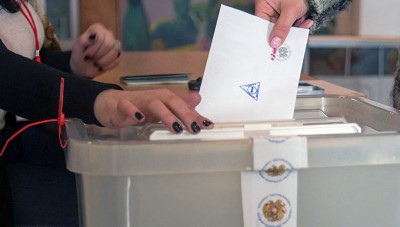
The Past daily of Armenia writes as follows, in particular: Yesterday it became known that Moldovan President Maia Sandu’s party received a de facto majority in the parliamentary elections held [in Moldova] on Sunday.
As expected, there were admiring statements from European officials. The reactions of Armenian “pro-Westerners” were no less passionate and enthusiastic, who were noting that Armenia also should follow the same path next year. A number of CC [i.e. the ruling Civil Contract Party and its parliamentary faction] members also were supporting this point of view in various posts on social media.
According to experts, this may mean that in the upcoming parliamentary elections, today’s authorities of Armenia may apply the same Moldovan scenario, namely, to build the entire election campaign by dividing the political field into “pro-Westerners” and “pro-Russians.”
However, the thing is that it will be difficult to do this in Armenia. True, the CC and several of its small satellite parties will attempt to characterize the opposition field as “Russian subjects,” “5th column,” etc., of which there are signs.
Nevertheless, it must be admitted that there are pronounced, even extremist “pro-Westerners” in our country, but pronounced pro-Russian forces are few (if any). The overwhelming majority of the opposition field [in Armenia] is neither pro-Western nor pro-Russian; they are mostly supporters of national values, and act from the positions of pro-statehood and balance and clear-headed judgment in foreign political relations.
That is, the fight [for power in Armenia] will not be between pro-Westerners and pro-Russians, but between the [incumbent] authorities (including their satellites) and pro-Armenian, pro-Armenia forces. Let us add to all this that in Moldova, Sandu’s party achieved a more favorable result thanks to voting in polling stations abroad. This factor also will not work in the elections of Armenia.