make preferable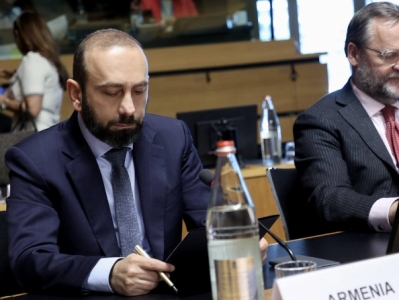
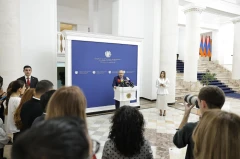
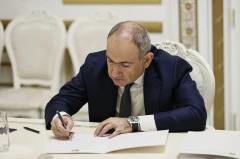
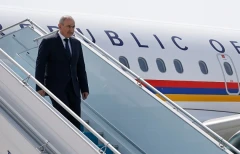
On October 20, Armenian Foreign Minister Ararat Mirzoyan participated in a ministerial meeting organized by the European Union on the topic of “Interregional Security and Connectivity.”
During a discussion on security, stability, and resilience in the Black Sea region, Minister Mirzoyan delivered a speech, emphasizing Armenia’s strategic role:
"Your Excellencies, esteemed colleagues,
The Black Sea region has always been a crossroads of civilizations, trade, and geopolitical interests. It serves as a crucial link between Europe, the South Caucasus, and Central Asia, where expanded cooperation can foster connectivity, sustainable development, and mutually beneficial partnerships, fundamentally transforming the region’s geopolitical and economic landscape. These are not just words or ambitious visions—they are today’s imperative.
In this context, we fully understand that realizing this vision is only possible under conditions of peace and stability.
While the Black Sea region faces serious challenges—particularly the ongoing war in Ukraine, which has caused severe human suffering—the South Caucasus has recently transitioned toward lasting peace. On August 8, 2025, a historic event took place in Washington, where the leaders of Armenia, Azerbaijan, and the United States signed the widely recognized Joint Declaration. The agreement on "Establishing Peace and Interstate Relations between Armenia and Azerbaijan" was pre-signed by myself and the Azerbaijani Foreign Minister.
Thus, peace is established, and the three leaders have expressed a strong commitment to reinforcing it. This creates a firm foundation to close the page on hostility and open a new era of friendly relations based on mutual respect, sovereignty, territorial integrity, and inviolability of borders, in accordance with the UN Charter and the 1991 Alma-Ata Declaration.
The path forward is a process that requires patience, careful attention, addressing practical issues, and strengthening mutual trust. Armenia is sincerely engaged in transforming confrontation into constructive engagement and cooperation.
History teaches us important lessons. The European Union was born from the ashes of war, built on the vision that common economic interests—initially in coal and steel—can make future conflicts irrational.
Situated at a crossroads, Armenia can play a decisive role in the chain connecting Europe, the South Caucasus, and Central Asia. The unlocking of transport communications between Armenia and Azerbaijan, agreed upon on August 8, will promote mutually beneficial transport links, including Armenia’s “Peace Hub” project and its integral part, the TRIPP route (the “Trump Route for International Peace and Prosperity”), all operating under full sovereignty, territorial integrity, and legal authority of the states. By strengthening this chain, we can enhance mutual trust, interdependence, and sustainable growth. As European Commission President Ursula von der Leyen stated at the EU-Central Asia Summit: “Opening Armenia’s borders with Azerbaijan and Turkey will be a game-changing event.”
This is why we welcome the creation of the EU Coordinating Platform on the Trans-Caspian Transport Corridor, and Armenia is ready to be an active and constructive partner in ensuring its success, including through the inclusion of our “Peace Hub” project and the TRIPP route in the EU’s “Global Gateways” initiative.
The new era of security and stability in the South Caucasus is further strengthened by Armenia’s commitment to enhance national resilience, and our partnership with the EU plays a central role in these efforts. The Armenia-EU bilateral agenda now includes a significant security component, expanding our relations from political and economic cooperation to a strategic partnership.
High-level political and security dialogue, periodic security and defense consultations, the EU monitoring mission in Armenia, the agreement defining Armenia’s participation in EU Common Security and Defense Policy missions, as well as support through the European Peace Facility and the “Resilience and Growth” program, all contribute to the continued strengthening of Armenia’s resilience.
At the same time, like many democracies, Armenia faces growing hybrid threats, particularly foreign information manipulation and interference. These are not isolated actions; they are targeted, coordinated, and hostile campaigns aimed at specific objectives, including weakening trust in sovereignty and democratic institutions and disrupting cooperation and allied partnerships.
Addressing these challenges requires strong, trust-based cooperation among states that share fundamental principles and norms of international law and a commitment to democratic lifestyles.
Dear colleagues,
In these efforts, you can rely on Armenia as a trusted partner.
Thank you."*