make preferable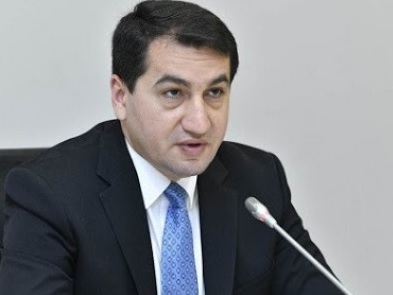
During a press briefing at the Azerbaijani embassy in Brussels, Azerbaijani presidential aide Hikmat Hajiyev presented Baku’s position on closer cooperation with the European Union (EU) on relations, energy, and regional security.
In an interview with EU Today and a small group of reporters, Hajiyev described Azerbaijan’s current agenda as a transitional period in the South Caucasus, from “victory in war to victory in peace.”
At the center of Hajiyev’s respective message was the “Zangezur corridor,” which he directly linked to both Azerbaijan’s post-war strategy and the objectives for developing ties with the EU. According to him, this route will “have a transformational impact on the Eurasian transport landscape,” and Azerbaijan “will play an important role in this process.”
The Azerbaijani official said that work on the Azerbaijani section of this “corridor” is expected to be completed in 2026. Hajiyev added that Baku “wants to see the European Union as part of this new transport architecture,” including within the framework of the EU’s Global Gateway initiative.
Hajiyev presented this “corridor” as a practical element, calling it Azerbaijan’s “peace victory strategy.”
“For Azerbaijan, the war [with Armenia] is over, and the conflict is exhausted. We must consolidate peace on the ground and make it long-lasting,” he said.
According to Hajiyev, peace “should not only be the absence of war,” but must bring “prosperity and development” and build interdependence among neighbors. In this context, the Azerbaijani president’s aide suggested that Armenia could transform from a “dead-end” into a transit country as East-West and North-South connections expand.