Preferred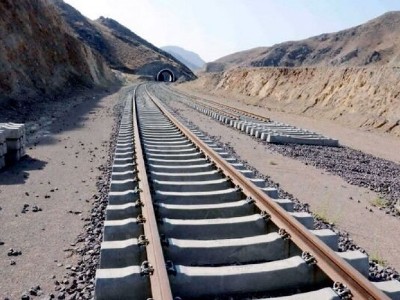
The customs duties proposed by Georgia provoked a reaction not only in Azerbaijan, but also in Georgia itself; they forced the authorities in Tbilisi to respond and make a gesture they likely considered politically advantageous. It was announced that Georgia would provide a one-time “free” transit of Azerbaijani oil products to Armenia, Minval Politika writes.
However, such one-time decisions do not resolve the main question: what is Tbilisi’s real position regarding long-term tariffs and customs duties? And most importantly, whose interests shape this policy, which is so unexpected for a country that for decades relied on Baku’s support and gained structural benefits from its transit position? The paradox is that Georgia, which essentially developed as a transit hub thanks to Azerbaijani investments and infrastructure projects, is now taking steps that weaken its own competitive advantages.
In a situation of competition for rents—transit monopolies—Georgia suddenly offers tariffs that make transportation unprofitable. At a moment when the region is trying to move from the logic of conflict to the logic of connectivity, Tbilisi’s such behavior resembles the torpedoing of regional mutual trust more than a rational economic strategy. Such moves inevitably raise for Baku the need to seek alternative routes—not as a pressure tool, but as a means of ensuring predictability and strategic autonomy.
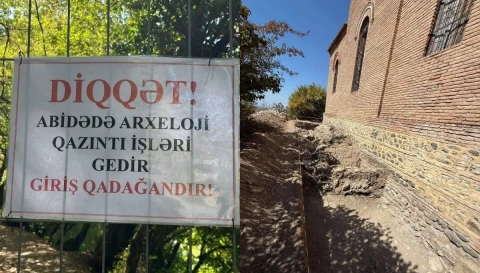
Sources familiar with the respective discussions between Baku and Yerevan told Minval Politika that Azerbaijan has already begun assessing its own options for forming an alternative logistical axis. During Soviet times, there was a railway branch connecting Baku with Qazakh, Azerbaijan and then going toward Ijevan, Armenia. Today, Baku is considering the possibility of restoring that section—from present-day Qazakh to the conditional border with Armenia.
According to Minval Politika’s information, a preliminary assessment has already begun. Experts are examining the technical parameters, cost, and timelines for the possible restoration of that section, which would enable part of the transit to be taken out of dependence on Georgia. The cargo could then cross the border by trucks and continue deeper into Armenia; from a modern logistics perspective, this solution is fully feasible.
In parallel, the option of full road-based routes is also being studied. Route planning has not yet been finalized; alternative corridors and their economic efficiency are being discussed. However, the very fact that such discussions have emerged speaks to the main point: Azerbaijan no longer views transit through Georgia as the sole or unavoidable route.
And there is an important political signal in this. The region is changing much faster than many players are used to thinking. And if someone believes they can place Baku in a position of dependency, that is the key miscalculation. Azerbaijan has repeatedly demonstrated that it can exceed expectations in construction pace and the creation of new logistical routes. It is enough to recall the most recent example: the unprecedentedly rapid reconstruction of Nagorno-Karabakh and its transport infrastructure, which has no parallel in the modern post-conflict world.
In the contemporary South Caucasus, transit monopoly can no longer serve as a tool of political pressure; rather, it turns into one’s own vulnerability. Therefore, Tbilisi’s attempt to restore its leverage of influence through artificial obstacles contradicts both the spirit of the times and Georgia’s own long-term interests.
Today, Tbilisi faces a simple choice: either integrate into the new regional cooperation model, or watch as alternative routes are formed in which its presence ceases to be necessary.
History shows that countries capable of recognizing change in time strengthen their subjectivity, whereas those clinging to old mechanisms inevitably lose it.
Thus, Georgia’s response to this crisis will become a test of its political maturity. Baku has already drawn its conclusions. Now it is Tbilisi’s turn—whether it is ready to move beyond the short-term tactics of momentary gain and shift to strategic partnership.
“We once called Armenia the geopolitical dead end of the region. Georgia will, of course, not find itself in such a position, but do the [Georgian] authorities truly want the country to be left out of key regional processes?” Minval Politika concluded.