make preferable
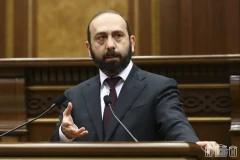
What happened on August 8 was a political declaration, a political meeting, political negotiations. But the further we move away from August 8 and the more political goals are being implemented, the more a transformation towards the economy is taking place. Prime Minister Nikol Pashinyan stated this in an interview with the Public Television of Armenia today.
“In Armenia-Azerbaijan relations, we see that the economy is overtaking politics. The same is here, too. The political declaration draws economic attention. When the density of economic relations begins to be more than that of the political one, it means that the political declaration has achieved its goal, is being implemented,” said the Armenian PM.
“We did not talk with [US Vice President JD] Vance yesterday about the border situation, about regional tensions, which does not mean that there is no such issue on the agenda. Of course, there are issues related to the post-conflict situation, which have naturally been discussed,” he said.
And referring to whether Armenian citizens will also encounter Azerbaijanis when passing through the territory of Azerbaijan within the framework of the Trump Route for International Peace and Prosperity (TRIPP) project, Pashinyan said: “We should perceive TRIPP as an investment program. It was a political declaration on August 8, now it has been transformed into an investment program where the US will lead this investment activity. We must perceive the ‘Front Office’ and the ‘Back Office’ as the investor’s desire and aspiration to provide the highest quality and most appealing services possible, so that as many people as possible can benefit from it. There may be no people at all in the ‘Front Office,’ but there may be AI, state-of-the-art equipment.
TRIPP is an investment program that is being implemented in Armenia, there is no TRIPP in Azerbaijan; therefore, I cannot say what will happen there. Border crossings in both countries will operate within the framework of the [two] countries’ sovereignty, territorial integrity, jurisdiction. There will be access to transportation and communication routes under conditions of reciprocity."