make preferable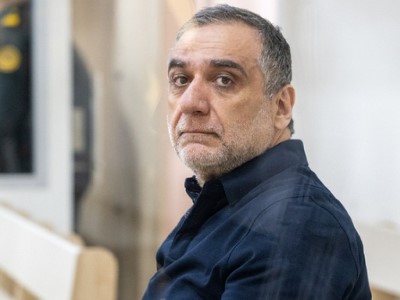
During a phone conversation with his family, former Artsakh (Nagorno-Karabakh) state minister Ruben Vardanyan conveyed the content of his closing statement at Tuesday’s “court” session in Baku, the capital of Azerbaijan.
Refusing to participate in this sham justice, Vardanyan spoke about dignity, responsibility and peace, which is possible only between equals.
Below is an excerpt from the Armenian text of Ruben Vardanyan’s Russian voice message.
“On February 10, I made a closing statement, prohibiting the lawyer from presenting defense arguments, since I consider what is happening not a trial, but a judicial farce, since there was no possibility of a normal judicial process. Therefore, despite the resistance of the judges, the lawyer did not present any arguments or justifications. And I spoke very briefly. I do not want to repeat [myself]. I already spoke about the main ideas in December.
(...).
And even for gasoline trains. I have said and repeat: we must understand that we have a long road to peace, which is not easy. We still have to go through a great internal revival, first of all, restore ourselves, because, I repeat, peace can only be when there will be two equal neighbors.
If one humbles itself before the other, nothing will work, there will be no peace. I hope that we will realize this and understand that everything depends only on us, on our ability to self-restore, to respect ourselves, without losing the realization that we really need to live in peace in our region.
I have said to the court and repeated three times what they attempted to stop me from saying: Artsakh was, Artsakh is, and Artsakh will be in the very ontological sense. That Artsakh was, is, and will be.
This is not a question of a legal nature, but about the fact that one simply cannot take and erase anyone. And I am deeply convinced of this. I have said that I will do everything so that during our, I hope, lifetime, the leaders of the three parties [i.e. Armenia, Artsakh, and Azerbaijan] of the conflict will lay flowers together at the graves of representatives of every nation and religion and apologize to all mothers for their fallen children. I hope that this will happen one day, and that it will happen precisely with respect for everyone and each other.
Also, said that I am happy here to represent the Armenian people in this trial, I am not afraid of any punishment or decision and I am ready to accept it with absolute calm, because what is happening is not a trial, but a judgment. And, unfortunately, they did not take the opportunity, did not take advantage of the opportunity to conduct a normal judicial process which would have enabled laying the foundation for a truly long-term peace. Instead, they organized an incomprehensible, unprofessional show, which, unfortunately, did not benefit anyone, and first of all, the Azerbaijani state itself. I am sure [of it].”